- green-spots
- water purification
- Rwanda
- Nyagatare multipurpose water project
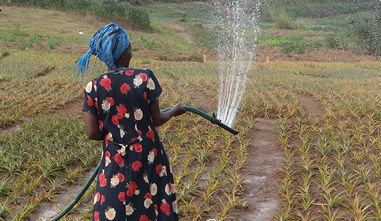
Nyagatare multipurpose water project
Rwanda
last update:
8 months agoProblems
Rwanda is an East African hotspot when it comes to climate change. Previous observations have shown significant regional climate changes, particularly in precipitation's spatial and temporal distribution. The climate is influenced by hiking in the inner-tropical convergence zone, with two rainy seasons per year.

The Nyagatare region is located in northeastern Rwanda. A large number of hills characterize its topography. Here, soil erosion leads to considerable water loss. Nyagatare is also the largest district in the country.

The area has higher temperatures than other parts of the country and lower rainfall, leading to regular drought. The monthly distribution of rainfall varies annually. The rains are too weak and unpredictable to meet the needs of agriculture (rice, corn) and livestock (cattle). The very limited hydrographic network offers only a few water resources that the population can use. The weak river network is a serious obstacle to meeting the water needs of humans and animals.
Solutions
Nyagatare multipurpose water project
Author: Nature Office
The Nyagatare Safe Water Project is an initiative that aims to provide clean and safe water to the people living in the Nyagatare district of Rwanda. This region faces many challenges due to climate change, drought, and soil erosion.

The project involves the rehabilitation of broken water wells that are currently inoperable and the construction of a new dam that will store and distribute water for domestic and agricultural use. The project has multiple benefits for the local communities' health, environment, and economy and contributes to the United Nations Sustainable Development Goals.

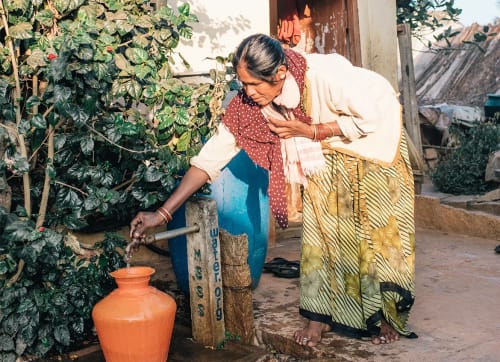
Without the appropriate maintenance, wells become broken and inoperable, forcing people to fetch water from open ponds and streams contaminated with bacteria and parasites. This means more extended and dangerous journeys to collect water, especially for women and children, who are more vulnerable to attacks by wild animals and human predators.

Moreover, the water must be boiled before it is used, which requires firewood collected from the nearby forests, leading to deforestation and high CO2 emissions. The smoke from the open fires also irritates the lungs and eyes, causing respiratory and eye diseases. The project website estimates that each borehole supplies around 2.5 million liters of water per year, equal to one Olympic swimming pool, and reduces CO2 emissions by 10,000 tons per VPA (Verified Project Area) through the optimized water gathering process.

Nyagatare multipurpose water project provides clean water to about 300,000 people and ensures 7,380 hectares of farmland are irrigated; it involves the construction of a dam with a 30.5m height and the capacity to contain 35 million cubic meters (m3) of water. It will also have a power plant expected to generate 740KW of electricity.

Among the project's beneficiaries include the development of agriculture through irrigation in the Tabagwe, Gatunda, Karama, Rukomo, Nyagatare, Rwempasha, Musheri, and Rwimiyaga sectors. Charged at a 1.47% interest rate per annum, the loan will be paid in 25 years, which includes a year grace period.

The Nyagatare Safe Water Project is a remarkable example of how a simple intervention can profoundly impact people's lives and the environment. By providing clean and safe water to the people of Nyagatare, the project improves their health, education, and income, reducing their carbon footprint and preserving natural resources. The project is a testament to the power of collaboration and innovation and the importance of addressing the global challenges of climate change and water scarcity.
Source: https://www.natureoffice.com/en/carbon-offset-projects/energyefficiency-others/nyagatare-wells
Gallery
3

Timelines
2015
The Rwandan government, together with financial support from the World Bank, constructed a USD 10 million dam and water reservoir.
2019
The project was launched by ClimatePositive in 2019 with the aim of providing clean and safe water to the people living in the Nyagatare district of Rwanda, a region that faces many challenges due to climate change, drought, and soil erosion.
2020
The nyagatare water project was verified by the Gold Standard Foundation, a globally recognized standard for climate and development projects.
2021
The construction of the Nyagatare multifunctional water project in the Nyagatare district of Rwanda began. The Rwandan Parliament approved a US$147.5 million loan from the African Development Bank to implement the project.
2023
The project completed the construction of the new dam and started distributing water to over 100 families in Nyagatare district.
2025
Water supply pipeline worth over Frw 300 million completed in Nyagatare.
Residents of Kiyombe Sector in Nyagatare District who previously relied on unsafe water sources now have access to clean water, thanks to a newly constructed 24-kilometer water pipeline. This project is expected to provide clean water to 14 villages that were previously dependent on contaminated water sources.

The official inauguration of the water pipeline took place on August 14, 2025. The pipeline features 30 water collection points that will supply water to residents in these 14 villages of Kiyombe Sector. The project, which cost Frw 309 million, was funded with contributions from various partners.

This project has protected from the risks of diseases caused by contaminated water because clean water is now available. The water infrastructure plays a vital role in improving hygiene. Access to clean water, their health and enhances overall cleanliness.

Currently, water supply projects in Nyagatare District are ongoing, and the district has achieved 78% coverage, providing clean water to its residents.