Problems
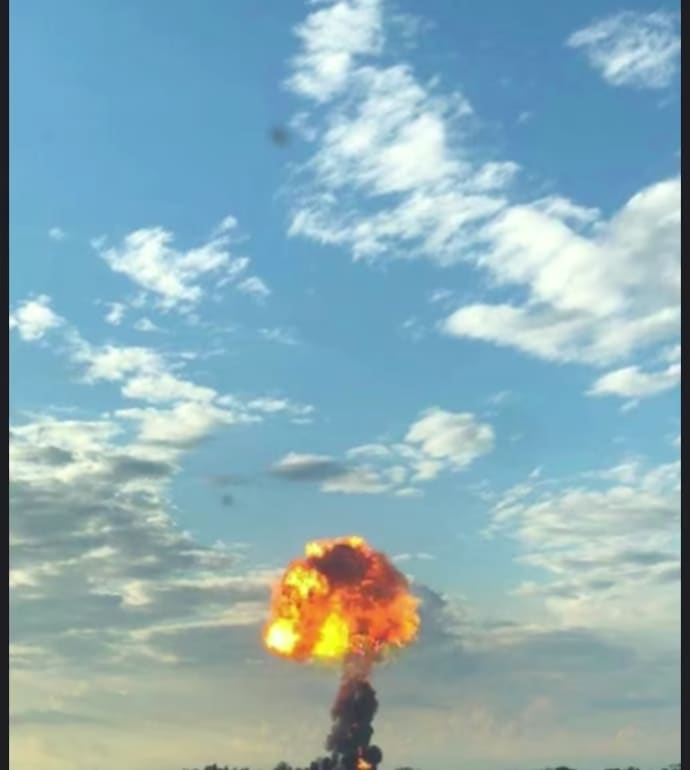
In the Dnipropetrovsk region, in the Novomoskovsk district, a fuel tank exploded, which was hit by rockets of the occupiers.
A fuel tank exploded at an oil depot in the Novomoskovsk district. On the previous day, PJSC Dnepronaftoprodukt had been shelled by Russian troops. A total of 13 people were injured, one of whom died. But in addition to the human losses, great damage was done to the ecology of the region.
Properties of oil
A large release of thermal energy caused a disturbance in the climatic balance. Fire hazard is related to chemical composition and physical properties. Crude oil is a mixture of sulfurous, nitrogenous, oxygenated, cyclic hydrocarbons, all of which are combustible substances, and materials - chemical compounds of organic origin.
What substances are released into the atmosphere during oil combustion
During combustion, the formation of spills as a result of damage to main oil pipelines, and depressurization of process equipment at refining and centralized storage facilities, both harmful and less hazardous substances are emitted into the atmosphere.

These include:
● Carbon oxides - CO, CO2;
● Nitrogen oxides - NO, NO2;
● Hydrogen sulfide;
● Sulfur oxides;
● Hydrocyanic acid - HCN;
● Formaldehyde;
● Acetic acid.
Ash residue formation
The combustion of spills of crude oil, commercial products, and waste products of its chemical and technological processing is extremely dangerous. As a result of the complete combustion of liquid petroleum hydrocarbons, only a mineral ash residue remains, mainly consisting of metal oxides, silicon, and calcium. This ash residue in oil and other heavy petroleum products is a hundredth to thousandths of a percent by weight, while in gasoline it is zero.
Is it possible to extinguish oil?
Oil density from almost all known fields and places of extraction is lighter than water, so it is useless to extinguish oil with much fewer petroleum products with even lower density. Oil does not dissolve in water, although it is capable of forming emulsions with it.
Distribution of pollutants
The main transport of pollutants in fires is through the air. Two circumstances contribute to this. First, most of the toxic compounds with the products of combustion enter the air in the form of directed convective flows. Second, winds contribute to the transport of pollutants. Smoke from large fires causes changes in illumination, and air temperature, and influences the amount of precipitation. In addition, smoke aerosol and gaseous products, interacting with atmospheric moisture, can cause acid precipitation - rains, and fogs. The penetration of smoke, dew, and rain on the leaves causes disease and death of plants. The release of large amounts of smoke during large fires reduces the amount of solar radiation coming from the Earth's surface and, as a consequence, leads to climatic changes lasting for days, weeks, and months. These factors affect plant growth, especially if they coincide with the growing season.
Impact on the environment
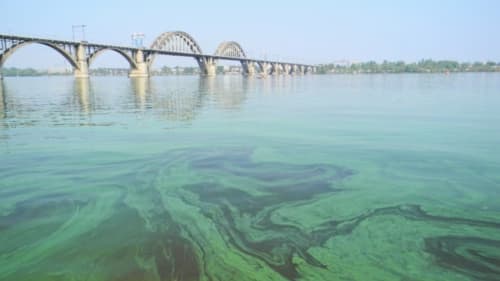
Contamination of soil and water bodies with extinguishing foams, water spilled during extinguishing, and combustibles themselves, such as oil when spilling flammable liquids is a direct dependence on the types and scale of the fire. Extinguishing water may contain flame retardants and pyrolysis products of combustible materials. Other additives introduced into combustibles may enter the water. These substances may enter water bodies during extinguishment through the sewer system from groundwater, and by deposition from the air, where they have been carried out by convective currents with the rest of the combustion products. Many toxic substances, such as heavy metals, and dioxins, ingested by water or soil, can accumulate in the bodies of fish, and birds, and further, through the food chain enter the human body. Thus, pollution of the environment as a result of fires and accidents of oil and oil products can occur indirectly and appear years later.
Ukrainian environmentalists will deal with the consequences of the Russian occupants' attacks on the Novomoskovsk oil depot, trying to prevent an environmental disaster not only for the Dnipropetrovsk region but also for Ukraine as a whole.
Gallery
3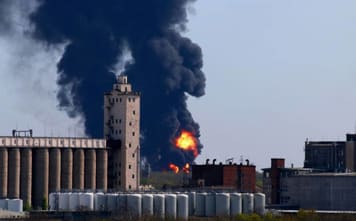
Timelines
2022
June 19
As a result of an enemy missile strike on an oil depot in the Novomoskovsk district, a fuel tank exploded, and 13 people were injured, said the head of the Dnipropetrovsk Regional Military Academy Valentin Reznichenko. Rescuers extinguished the fire for 14 hours.
June 18
As a result of three missiles, an oil depot was destroyed and three people were injured. This was reported by the head of the Dnipropetrovsk OVA Valentin Reznichenko. The Russian military attacked the Novomoskovsk district. Now there is a fire at the site of the oil depot, rescuers are working there. People received burns - all three were hospitalized.

It is reported that a column of smoke rises above the scene of the explosion.