Making healthier, more planet-kind choices matters, especially when considering menstrual products. In the United States alone, approximately 12 billion pads and 7 billion tampons are discarded each year.

This highlights a significant opportunity for positive change, as many of these disposables can take a long time to break down. Creating a sustainable period routine is more accessible than ever.

What we use for just a few hours can stick around for centuries, as disposable pads take 500–800 years to decompose. With a few informed swaps, however, we can change that. Today, we’re tackling periods with four proven tips to help you transition to a low-waste feminine care routine.

1. Understand your reusable options
Making the switch to low-waste period care starts with understanding the benefits and exploring the wide range of available products. It's not just about reducing waste; it's about saving money, avoiding potentially harmful chemicals, and often, getting better performance.

There are compelling reasons to go low-waste on your period.
Less cost overall: The average menstruating individual spends roughly $10 per month ($120 per year) on disposable menstrual hygiene products like tampons, liners, and pads. In contrast, a reusable product often pays for itself within a few cycles and can last for years.
Safer, non-toxic materials: Conventional disposable products often contain bleach-processed rayon, plasticizers, and synthetic fragrance chemicals. Reusables are typically made from medical-grade silicone or organic cotton, allowing you to sidestep those additives.
Same (or better) leak protection: Modern menstrual discs, cups, and high-absorbency period underwear are designed for superior performance. They often hold three to five times more fluid than a regular tampon.
Positive environmental impact: Over a lifetime, a single person using disposable tampons can generate approximately 300 pounds of waste. By swapping to just one reusable disc, you can divert roughly 2,400 disposable products from the landfill over ten years.
Your body is unique, and so is your flow. The best product for you depends on your comfort, lifestyle, and anatomy. Here’s a breakdown of the most popular options:

Menstrual cups
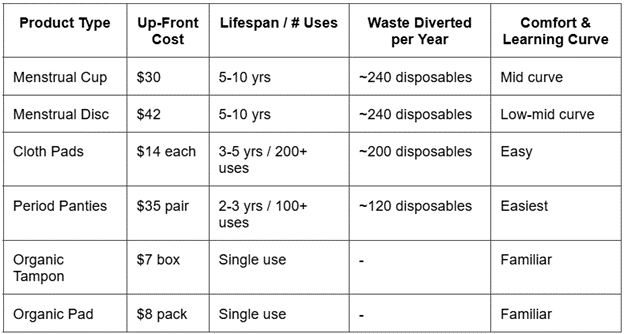
These are bell-shaped reservoirs made of flexible silicone that sit in the vaginal canal and collect menstrual fluid. They have a lifespan of 5-10 years and offer long wear times and high capacity. While they have a learning curve, they require creating a suction seal to stay in place and prevent leaks.

Menstrual discs
Menstrual discs are flat, flexible rings with a soft collection basin that tuck behind the pubic bone instead of relying on suction. This design often translates to a more comfortable, "can't-feel-it" fit. An example is the reusable nixit menstrual disc, made from soft, medical-grade silicone and featuring a one-size-fits-most design.
Discs can be worn for up to 12 hours and even during mess-free intercourse. The main challenge for new users is mastering the slightly different insertion angle compared to other internal products.

Reusable cloth pads
Made from layers of organic cotton or bamboo, these pads snap securely around your underwear. They offer the familiarity of a traditional pad but are breathable and come in various prints and sizes. The primary drawback is the cleaning process and planning for carrying used pads when you're out.

Period panties
These look and feel like regular underwear but feature a built-in, multi-layered gusset that absorbs menstrual fluid. They are incredibly easy to use and are an excellent choice for overnight protection or as a backup. The upfront cost is higher, and they typically need to be replaced every 2-3 years.

Sea sponges
These are naturally porous marine sponges that are trimmed to a size similar to a tampon. They are fully biodegradable and have a very gentle texture. However, they require meticulous sterilization between uses, and it's recommended to consult a clinician before trying them.

Key insight: Switching to reusable period care offers a triple win: it saves you significant money long-term, eliminates exposure to synthetic chemicals, and dramatically reduces your environmental footprint.

2. Select eco-friendly disposables when needed
A low-waste journey doesn't have to be all-or-nothing. Sometimes, disposables are the most practical option, such as when traveling, during postpartum spotting, or as a backup on heavy days.

When you do need a single-use product, you can still make a more sustainable choice. Look for options made with 100% organic cotton cores, plant-based applicators, and plastic-free wrappers. Many brands offer excellent alternatives to conventional products.

Side-by-side product comparison


3. Master sustainable care and disposal
Part of a low-waste lifestyle is knowing how to care for your products to maximize their lifespan. It is also important to know how to dispose of them responsibly when they reach their end.

End-of-life best practices
Retiring silicone (Cups/Discs): Medical-grade silicone is not curbside recyclable, but it doesn't have to go to a landfill. Check for municipal or mail-in programs that down-cycle silicone into other materials.
Worn-out cloth pads & period panties: For textiles, first separate any non-compostable components. The remaining cotton or bamboo layers can be sent to a textile recycling facility or shredded and added to a home compost pile.
Single-use pads & tampons: Never flush pads or tampons, as they can cause severe plumbing blockages. Wrap them in recycled-paper toilet tissue or their wrapper and dispose of them in the landfill.
Maintenance FAQs
Here are answers to common questions about maintaining your reusable products
How do I sterilize silicone products? Between cycles, boil your cup or disc for five minutes. While traveling, 70% alcohol wipes are a convenient alternative for sanitization.
How can I remove stains from cloth pads? For best results, soak used pads in cold water before washing. Line-drying them in direct sunlight is also a natural way to bleach out stains.
Any tips for air travel? Pack your cup or disc in a breathable cotton pouch to ensure proper air circulation. All reusable period products are TSA-safe and perfectly fine to travel with.
Pro tip: To keep cloth pads pristine, soak them in cold water immediately after use. Line-drying them in the sun acts as a natural bleach to remove stains.

4. Build your perfect low-waste period kit
A successful low-waste period routine is about having a complete system that covers you on all days of your cycle. This often involves combining a few different products to suit your flow and activities. Let’s look at some key components to build your ideal kit.

Reusable menstrual discs
A reusable disc is notable for its thoughtful design, often made from one-size medical-grade silicone. The ultra-soft rim can reduce pressure for a barely-there feel, and many hold an impressive amount of fluid. They can typically be worn for up to 12 hours.
To use one, you simply fold it, insert it at an angle, and tuck the rim behind your pubic bone. You just need to rinse it during your cycle and boil it between periods. After the initial purchase, the annual cost drops to zero.

Post-period care
A holistic period kit shouldn’t end when your bleeding stops. It's common for vaginal pH to fluctuate during and after menses, which can sometimes trigger odor or irritation. Gentle post-period care can help restore balance.
Products like the OB-GYN invented NeuEve's Silver vaginal suppositories are formulated to support healthy flora without hormones or fragrances. Made with food-grade oils and botanicals, they help restore balance naturally. Always follow package directions and consult your healthcare provider if you have known sensitivities.

Your starter checklist
One primary reusable product (a menstrual disc OR cup)
Two to three cloth pads for backup or lighter lounging days
One pair of leak-proof period panties for overnight security or travel
A small stash of plant-based pantyliners for unexpected spotting
A small wet bag for carrying used pads or panties on the go
A gentle, fragrance-free wash (mild soap or a dedicated cup cleanser)
Cost & waste savings snapshot: your first year
Investing in a low-waste kit might seem expensive upfront, but the numbers speak for themselves. A starter kit with a menstrual disc, two cloth pads, and one pair of period panties costs about $100. In that first year, you will avoid using approximately 260 disposable products, and after four months, you’ll begin saving money each cycle.

Key insight: The initial investment in a low-waste kit pays for itself within a few months, leading to over $400 in savings within just five years.

The path forward
Choosing even one low-waste swap makes a difference. Whether it’s wearing a pair of period panties overnight or trying a reusable internal product, you are keeping plastic out of landfills.
A sustainable routine is about finding what works for you and feeling empowered by your choices. Small steps lead to big impacts, creating a cycle that’s kinder to you and the planet.
Do you have suggestions for this article? Would you like to propose a guest post?
Get listed in the eco directoryGet your company listed on EcoHubMap and expand your reach in the global green economy. Who can be listed?Add an organization