Exploring The Danube: Sustainable Perspectives On Europe’s Lifeline
August 26, 2025
The Danube is more than a blue ribbon on maps; it’s a living system that stitches together cultures, economies, and ecosystems from the Black Forest to the Black Sea. Any credible future for this river hinges on a sustainability lens—one that treats habitat, water quality, navigation, energy, and local livelihoods as interdependent, not competing.

It’s a formidable challenge precisely because the basin is so shared: nineteen countries and roughly eighty million people depend on it, making the Danube the world’s most international river basin and a proving ground for cooperation.

Sustainable travel along the Danube
Travel on the Danube offers a rare opportunity to combine cultural immersion with environmental responsibility, making it an ideal testing ground for regenerative tourism principles. River cruises, cycling tours, and eco-lodges can be planned to minimize emissions and maximize local benefits. For example, smaller electric or hybrid cruise vessels generate less wake and noise, reducing shoreline erosion and disturbance to wildlife. Onshore, well-marked cycling routes such as the Danube Cycle Path encourage slow travel, dispersing visitors to rural towns where spending directly supports family-run inns, organic farms, and craft workshops.

A basin that binds—and learns to govern together
The Danube’s sheer transboundary complexity is managed through the International Commission for the Protection of the Danube River (ICPDR), which aligns national plans under the EU Water Framework Directive (WFD).

That framework structures participation at multiple tiers—international, national, sub-basin, and local—so big-picture goals translate into concrete, on-the-ground actions. It’s not glamorous work, but it is foundational: common monitoring networks, joint flood and drought planning, and ecological objectives that transcend borders are the plumbing of sustainability.

Wild heart: wetlands, floodplains, and the delta
Healthy rivers breathe through their floodplains, and the Danube’s lungs are extensive. Reconnected side-arms and island complexes slow floods, trap sediment, and provide nurseries for fish and birds.

The emblem is the Danube Delta—Europe’s largest reed bed—recognized by UNESCO as both World Heritage and  Biosphere Reserve, with over 300 bird species and 45 freshwater fish species. Beyond biodiversity, the delta acts as a vast natural filter, reducing nutrient loads before they reach the Black Sea—a service no treatment plant can easily replicate at scale.

Re-Knitting the river’s islands
A flagship of nature-positive engineering is the LIFE WILDisland initiative, which links 34 near-natural islands from Germany to Romania into a habitat corridor. The project isn’t just planting trees; it’s restoring islands inside hydropower reservoirs, improving sediment dynamics in the lower river, and even “optimizing” navigation infrastructure so habitat can recover without undermining trade.

In 2024, momentum grew further when a Danube WILDisland Ramsar Regional Initiative was established—the first river-based Ramsar initiative in Europe—with the ICPDR serving as formal host. Together, these steps signal a long-term, multinational commitment to make space for a living river.

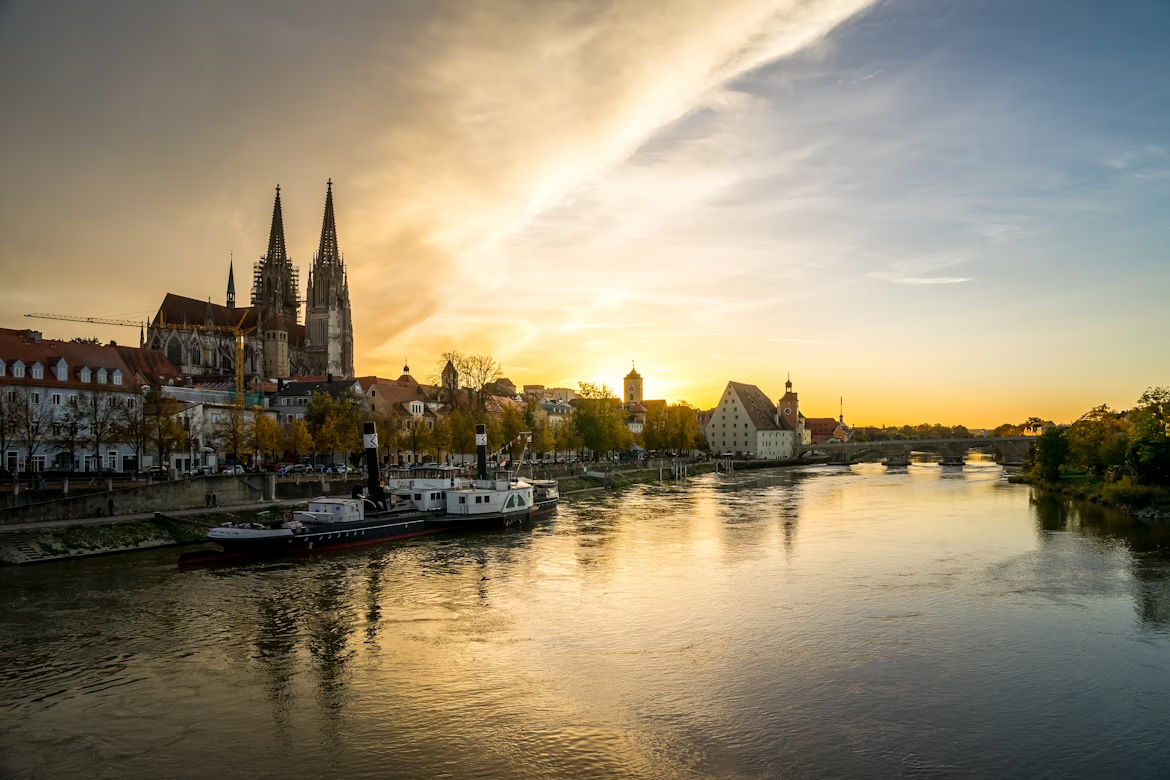
(Credit: Leonhard Niederwimmer via Unsplash)
Migratory fish at the Dams’ Edge
Hydropower has cut carbon in the region, but barriers such as the Iron Gates I and II have severed ancient migrations. Sturgeons—living fossils that once ranged far upstream—are now critically endangered, prompting basin-wide action: maintaining fishing bans, tackling illegal caviar trade, and designing fish-pass solutions that could reopen historic routes.

Acoustic tracking has documented adults still attempting to reach Iron Gate II decades after construction, a stark reminder of both resilience and responsibility. Success here would double migratory range in parts of the basin and become a model for reconciling energy and ecology.

Plastic, nutrients, and the Black Sea
Sustainability also means stopping what shouldn’t flow. A widely cited study estimated that the Danube delivers about 4.2 tonnes of plastic to the Black Sea each day; in some Austrian reaches during sampling, plastic items outnumbered larval fish—an arresting indicator of systemic leakage. Follow-on monitoring near the Sulina branch and broader Black Sea surveys reinforce the picture: while loads vary, riverine plastics are a persistent source.

The lesson is simple but demanding—prevention beats cleanup. Tightening upstream waste systems, extending producer responsibility, and riverbank capture programs can dramatically curb inputs before they reach the sea.

Shipping, climate, and a just transition on the waterway
The Rhine–Danube corridor is a backbone of European inland navigation, but climate volatility (especially low-water periods) and ecological constraints make “more channelization” a losing bet. Smarter interventions can align navigation reliability with ecological function: reconnecting floodplains to store water, managing sediments so bars and side-channels persist, and redesigning river-training works to create habitat rather than erase it.

WILDisland partners are already testing how to “optimize” grey navigation infrastructure so islands and riparian forests can rebound—proof that infrastructure and ecology can be co-designed rather than traded off.

Community prosperity through regenerative tourism
A sustainable Danube tourism model isn’t about more visitors; it’s about longer stays, smaller footprints, and shared local benefits. Cycling itineraries and birding in restored wetlands shift spending to guides, homestays, and conservation funds, while displacing higher-emission trips. Sensible caps on boat traffic in sensitive reaches, mandatory waste sorting at marinas, and citizen-science tie-ins transform visitors into stewards.

When communities can see and measure the returns—jobs that depend on clean water, festivals that celebrate migratory birds, farms that benefit from controlled flooding—conservation ceases to be abstract.

Five principles for a living danube

● Protect and reconnect floodplains. Nature-based solutions deliver flood safety, biodiversity, and water quality at once; the delta’s filtration and island corridors show why scale matters.

● Remove or soften barriers. Where full dam removal is unrealistic, fish passages, adaptive turbine operations, and habitat offsets can restore connectivity for long-distance migrants like sturgeons documented at the Iron Gates.

● Stop pollution at the source. Extended producer responsibility, storm-water controls, and leakage audits are cheaper and more effective than downstream cleanup; monitoring from Austria to Sulina underscores the urgency.

● Co-design infrastructure. Navigation reliability can rise alongside ecological function if sediment and side-channel dynamics are design goals, not afterthoughts—exactly the spirit of WILDisland’s “optimize, don’t over-harden” approach.

● Invest for the long term. Multinational frameworks—UNESCO protections, ICPDR coordination, Ramsar initiatives—outlast electoral cycles and keep science, funding, and civil society aligned.

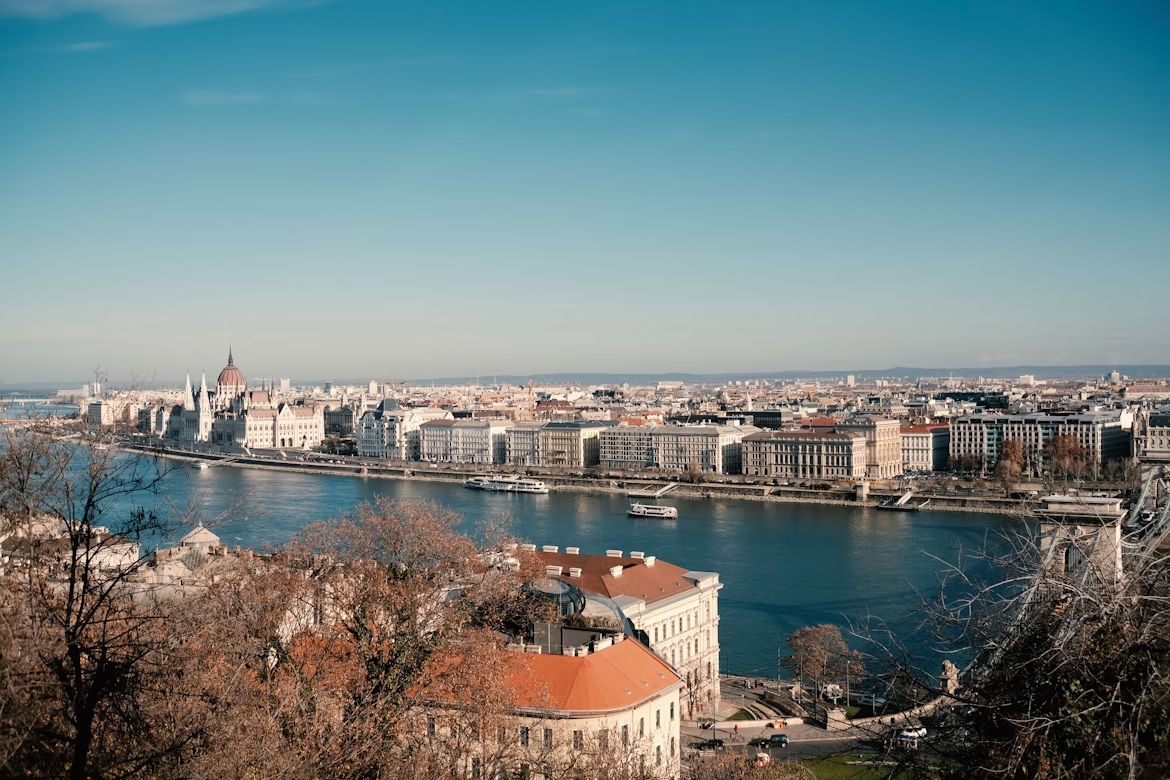
(Credit: Mark kassinos via Unsplash)
Why this matters now
Rivers don’t heal on annual budgets; they heal on generational ones. The Danube already has the bones of a durable solution: a cross-border governing body, a UNESCO-recognized delta, an island corridor funded by EU LIFE, and species-recovery programs with concrete engineering tests at the dams.
Do you have suggestions for this article? Would you like to propose a guest post?
Get listed in the eco directoryGet your company listed on EcoHubMap and expand your reach in the global green economy. Who can be listed?Add an organization