How Australian backyard design Is adapting to extreme heat
June 19, 2025
Australia’s escalating heatwaves and warming climate have revolutionised backyard design. No longer ornamental afterthoughts, outdoor spaces are now engineered for thermal comfort, resource conservation, and resilience. In narrow‑lot homes, designers blend structural innovation and native planting to tame urban heat.
Larger suburban yards have shifted toward layered shade canopies, passive irrigation, and water‑wise materials. Meanwhile, heat‑tolerant flora—especially native drought-resistant species like Lomandra, Banksia, and Eremophila—anchor landscapes with low-maintenance vitality. These gardens integrate thermal mass, strategic orientation, and smart irrigation, achieving cooler microclimates, reduced water use, and year-round functionality.
We will break down how Australians are reshaping backyards in four key areas, offering practical takeaways to make any yard in high‑heat zones both inviting and sustainable.
Narrow lot properties—common in Australian suburbs—face unique obstacles: limited footprint, boundary heat gain, and restricted airflow. Here's how designs pivot:
● Passive solar orientation & glazing - Designers emphasise high-performance windows and cross‑ventilation paths to harness summer breezes and thermal mass strategies
● Vertical shade structures - Pergolas, shade sails, and trellises line division fences to create cooling canopies. Dense vine coverage and slatted screens block midday sun before it hits walls, keeping interior surfaces 3‑5 °C cooler.
● Layered planting & vertical greenery - Slim gardens incorporate tall native shrubs, clipped hedges, and hanging screedly plants. This multi‑layered green insulation softens hardscape and buffers heat. Living walls or boundary greenery trap radiant heat and diffuse glare.
● Compact outdoor rooms - Built‑in bench seating, raised planter walls, and integrated shade create multipurpose retreats. These spaces act as buffer zones, shielding interiors and encouraging backyard use even in
Heat‑tolerant plant palettes
Australian gardens now prioritise flora that thrive in sun, low moisture, and extreme temperatures:
● Iconic drought-hardy natives - Species like Lomandra longifolia (spiny‑head mat‑rush) endure heat, drought, frost, and poor soils, making them garden workhorses. Eremophila spp. (emu bush) bring heat-tolerant colour and vibrancy. Xanthorrhoea (grass trees) thrive in poor soils and survive fire via built-in insulation.
● Wildlife‑friendly natives - Species like Everlasting Daisy, Ruby Saltbush, Silver Banksia, and Woolly Tea Tree bloom in intense sun and attract pollinators. They provide habitat and biodiversity value while enduring heat stress.
● Succulents & groundcovers - Heat‑loving succulents such as Pigface, Spinifex, and Lomandra cover ground effectively, reducing evaporation and limiting soil exposure.
● Calibrated texture & form - Soft grasses like Lomandra, upright shrubs like
Banksia, and flowing perennials like Thryptomene ‘F.C. Payne’ combine aesthetics with resilience
Smart water‑wise soil & irrigation
Managing scarce water under intense heat requires clever soil care and irrigation tactics:
● Deep‑root watering - Instead of frequent light sprays, gardens are now watered deeply and infrequently—early morning—targeting root zones to extend plant drought tolerance.
● Mulch‑heavy soil protection - Two‑to‑four‑inch mulch layers (leaf litter, wood chips, gravel) retain moisture, buffer soil temperature, and suppress weeds effectively .
● Efficient irrigation systems - Drip irrigation, moisture sensors, greywater reuse, and hydro‑zoning keep plants hydrated without waste.
● Soil structure & permeability - Builders avoid heat-retaining hardscape; instead, they favour permeable pavers, gravel beds, and organic soils that absorb and slowly release moisture.
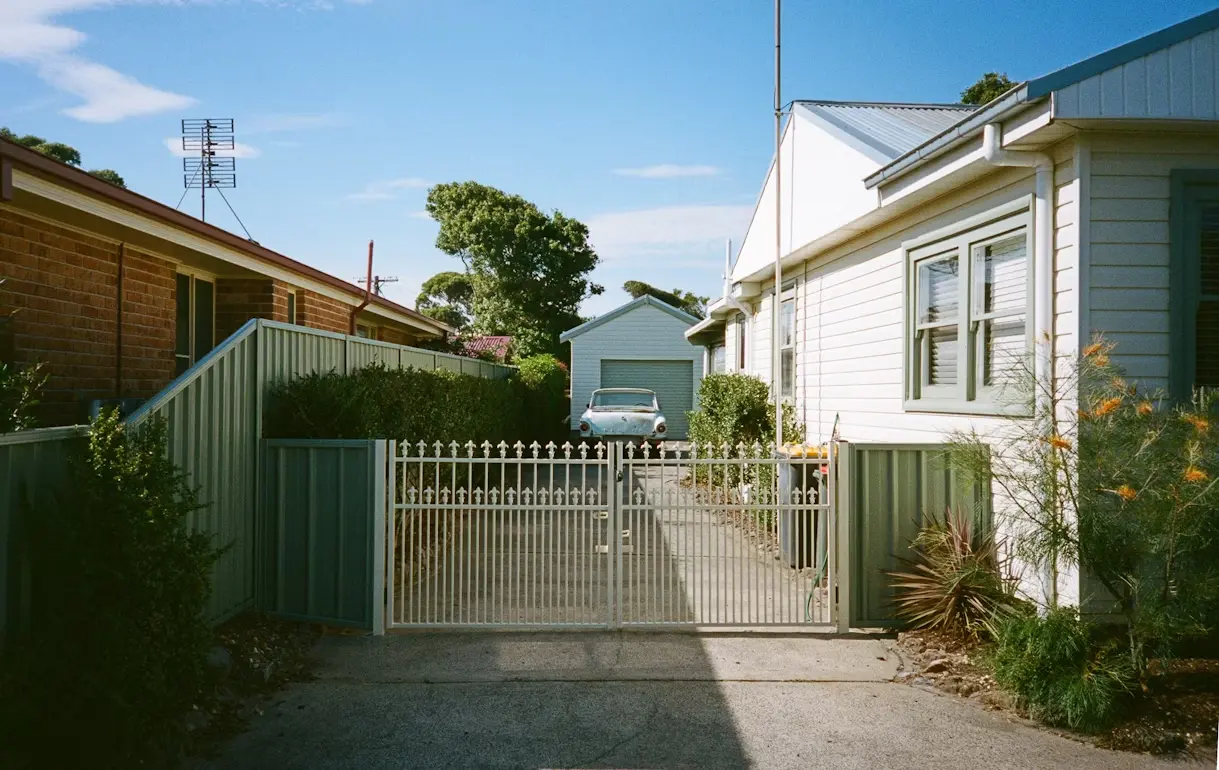
(Credit:Photo by Ben Bouvier-Farrell on Unsplash)
Passive cooling & built form integration
Beyond planting, architectural interplay and material choices play critical roles:
● Thermal mass & built shading - Walls, patio decks, and stone benches absorb daytime heat and release it after dusk, flattening peak heat waves . Western terraces are shaded by deciduous trees, trellises or retractable sails that fall off in winter.
● Green roofs & rooftop gardens - On flat‑roof homes or garages, extensive green roofs planted with sedums and grasses reduce surface temperature, insulate interiors, and lower urban heat islands.
● Shade layering - Designs layer overhead canopies (trees, sails), mid‑height shade (pergolas, trellis), and ground‑level plant screening, creating a cool microclimate with up to 10 °C drop compared to exposed areas.
● Materials & colour palette - Reflective roofing, light-coloured pavers, recyclable shade sails, and permeable gravel reduce heat absorption while offering stylish textures and contrast.
Urban heat islands & community planning
High-density areas with narrow lots compound heat stress—not just for homes, but neighbourhoods:
● Green boundary planting - Street-facing narrow-lot gardens install hedges, climbers, and trees to shade buildings and sidewalks, extending comfort to the street.
● Strategic tree canopy streetscape - Councils advocate for native, canopy-forming trees along footpaths, fostering shared outdoor cooling corridors, reducing ambient heat.
● Policy innovation & incentives - New developments are encouraged or mandated to include green roofs, permeable surfaces, shade structures, and water-sensitive design—aimed at combatting the “cheek‑by‑jowl” heat challenges in suburbs.
● Community‑scale cooling synergy - Clustering heat‑resilient gardens, parks, and courtyards creates distributed cooling hubs—benefiting all households and reinforcing resilience.
Outdoor technology & smart cooling solutions
Innovative technology is transforming Australian backyards into climate‑adaptive sanctuaries. These tools optimise cooling, reduce water use, and extend comfort even during scorching weather.
● Smart irrigation controllers - Modern irrigation systems now use weather-predictive algorithms, moisture sensors, and zone-specific scheduling to deliver water only when needed. Brands like Hydrawise or Rain Bird automatically adjust based on rainfall and temperature, conserving resources.
● Misting and evaporative systems - High-efficiency misting lines installed in pergolas or patios drop ambient temperatures by up to 10 °C through evaporation. These are particularly popular in entertainment zones and alfresco dining areas.
● Outdoor fans and solar-powered ventilation - Ceiling‑mounted fans or stand units help circulate air in covered zones. When paired with solar panels, they deliver energy‑free comfort with zero emissions.
● Lighting that respects heat and energy - LED garden lights with built-in dimming and motion sensors avoid excess heat generation and reduce night-time energy load—especially in tight narrow yards.
These technologies integrate seamlessly with the rest of the garden to create smarter, more liveable outdoor environments.
Endnote
Australian backyard designers are leading a shift toward heat-adaptive landscapes that elevate comfort, conserve water, and celebrate native biodiversity. Narrow‑lot homes deploy passive cooling, vertical greenery, and strategic shading to tame solar exposure. Across all yards, heat-resilient plant palettes, mulch-rich soils, and grey‑water irrigation are mainstream. Built features—thermal mass, green roofs, layered shade, and reflective materials—muting heat through structural synergy.
At neighbourhood level, planting strategies and incentives foster cooler communities. The result: attractive, functional gardens that perform under stress. No matter your garden size or climate, layering these elements will create a backyard oasis—even as temperatures climb.
Do you have suggestions for this article? Would you like to propose a guest post?
Get listed in the eco directoryGet your company listed on EcoHubMap and expand your reach in the global green economy. Who can be listed?Add an organization