Planning heavy-equipment deliveries for renewable-energy construction
October 16, 2026
Moving oversized equipment to a renewable-energy site comes down to five steps done in the right order: cargo documentation, route and access review, permitting, site readiness, and schedule management. Skipping one can leave a one-of-a-kind transformer or crane assembly stuck where it cannot legally or safely go.
Oversized loads face jurisdiction-specific rules, weight-restricted roads, and permit cycles that do not bend to project deadlines. Renewable-energy construction adds schedule pressure, because large components such as transformers and crane assemblies may need to arrive in a set sequence.
Planning with a specialist transport partner
The steps below depend on each other, so many project managers bring in a specialist early.
For projects in Texas, heavy haul trucking Texas planning with Titan Worldwide Logistics is one example of a team that coordinates route planning, pilot cars, and oversize permitting for energy and industrial sites.
A specialist partner can help coordinate permit requirements across jurisdictions and, where needed, bring in qualified third-party support. They can also work with carriers whose trailers match the confirmed cargo. Technical decisions about trailer selection, load configuration, and permit classification still require qualified transport professionals.
Know your cargo before planning
Every later choice depends on confirmed gross weight, full dimensions, and center of gravity. A dimension error here can mean permit problems or the wrong trailer arriving at the yard.
Configuration matters as much as size. A complete heavy machine has different transport needs than its disassembled components.
Complete machines typically ride on heavy-haul trailers such as a removable gooseneck or a lowboy, which keeps tall equipment within legal height limits. Lighter disassembled components may suit flatbeds or step decks, where taller freight rides on the lower deck, depending on confirmed weights and measurements.
Route and access review essentials
Mapping software is not enough for oversized freight. Navigation tools can miss bridge weight ratings, overhead clearances, and seasonal road limits. A proper review is a physical survey that confirms bridge load limits, overhead hazards such as power lines, and whether turns work with the chosen trailer.
The destination needs its own review of the final approach, staging space, and underground utilities. Rules also vary by state, and local rules can apply, so each jurisdiction on the route needs its own check.
Permitting and approval cycles
Oversized or overweight loads need a permit from each state they cross. In Texas, loads that exceed the state's legal size or weight limits require an oversize/overweight permit and an authorized route when applicable. Confirm current requirements with TxDMV before setting a delivery date.
Pilot car and escort requirements come from the permit conditions, so confirm them before departure.
Key Insight: Approval times differ by state and load classification, and superloads face a more intensive review. Check each state's current permit guidance before setting a delivery date.
Site readiness and delivery scheduling
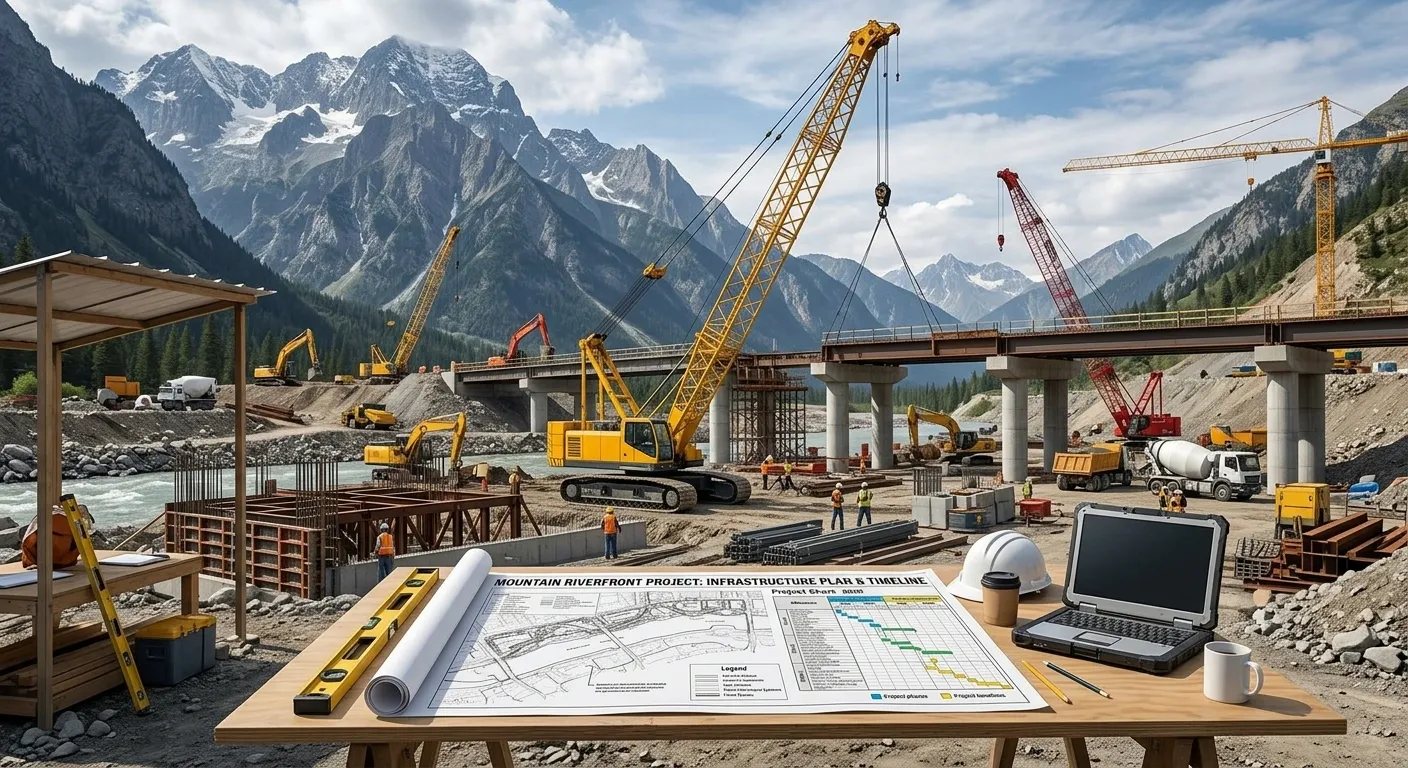
(Credit: Visual concept generated by EcoHubMap with AI)
Any crane or rigging needed for offloading must be on site within the delivery window, and access roads may need temporary reinforcement before a multi-axle trailer can use them.
Treat the schedule as a chain of linked milestones. Permit approval triggers carrier dispatch, dispatch sets the arrival window, and the window drives crew and rigging availability. Permit conditions may limit when a load can travel, and weather can cause delays, so build in contingency time and name a single point of coordination.
Warning/Important: A loaded heavy-haul trailer that cannot offload because of unprepared ground or missing rigging becomes a project bottleneck, not storage. Confirm ground reinforcement, staging areas, and offload equipment weeks in advance, not on arrival day.
A Texas example
An energy-construction team in Texas moving a complete machine alongside lighter disassembled components would plan separate transport for each. The machine would travel on a heavy-haul trailer such as a lowboy, while the components could move on flatbeds or step decks, depending on confirmed weights and dimensions. Routes, permits, and site access would be confirmed for every jurisdiction on the corridor before dispatch.
The bottom line
A gap in cargo accuracy creates permit errors, a gap in route review forces mid-move reroutes, and a gap in site readiness leaves equipment stranded. Doing the steps in order is what keeps the delivery manageable.
Advance surveys, early permit applications, and confirmed site coordination cost less than reacting to problems later, whether the work is handled in-house or by an outsourced team.
Do you have suggestions for this article? Would you like to propose a guest post?
Get listed in the eco directoryGet your company listed on EcoHubMap and expand your reach in the global green economy. Who can be listed?Add an organization