Stormwater Pollution Prevention Plans, or SWPPPs, turn national clean‑water goals into practical site rules. Any construction disturbing at least one acre, and most industrial facilities exposed to rain, must keep a written SWPPP and follow it daily.

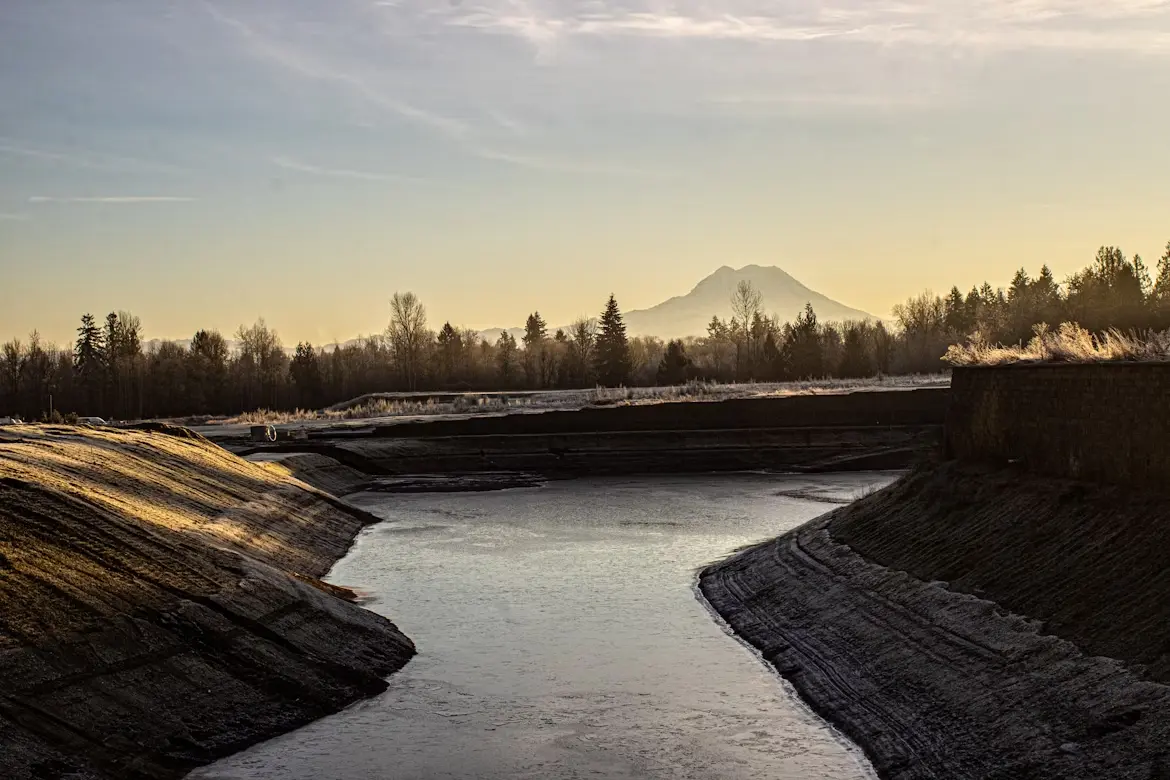
(Credit:Photo by Peter Robbins on Unsplash)

The document pinpoints pollutants, prescribes best management practices (BMPs), assigns inspectors, and logs fixes. Yet permits change often and states add twists, leaving managers unsure of obligations. This guide cuts the noise and shows how to meet federal, state, and local requirements.

Why SWPPP Matters
Uncontrolled runoff can harm waterways in a single storm. EPA studies show a bare acre may shed thirty‑five tons of sediment yearly, carrying metals, oils, and trash downstream. Clean Water Act penalties can surpass $62,000 per day. A tailored  SWPPP therefore serves as both shield and roadmap: it proves intent to comply while guiding crews on sequencing, housekeeping, and emergency response. It also cuts insurance costs, boosts bid competitiveness, and strengthens community goodwill.

Federal Regulatory Framework
The legal foundation is Clean Water Act §402, which established the National Pollutant Discharge Elimination System (NPDES). Any point‑source stormwater discharge associated with construction disturbing one acre or more—or with one of eleven regulated industrial sectors—needs permit coverage. EPA administers permits in tribal lands, U.S. territories, and four states; everywhere else the state issues its own version.

In EPA jurisdictions the 2022 Construction General Permit (CGP) governs building sites. A March 2024 modification extended coverage to lands of exclusive federal jurisdiction but left core requirements unchanged: develop a site‑specific SWPPP, install erosion controls before clearing, stabilize slopes quickly, inspect weekly and after 0.25‑inch storms, and file a Notice of Termination when final stabilization reaches 70 percent vegetative cover.

Industrial facilities currently follow the 2021 Multi‑Sector General Permit (MSGP). EPA released a draft 2026 MSGP that proposes stricter benchmark sampling, annual stormwater training, and a 24‑hour deadline to document any exceedance. The proposal also introduces a mandatory ‘No Discharge Report’ for sites claiming zero exposure. Public comment ends 19 May 2025, and the final permit will likely take effect in early 2026, giving operators little time to adapt.

Each EPA general permit imposes three pillars:

● Technology‑based effluent limits – baseline BMPs like stabilized site entrances, perimeter controls, good housekeeping, and spill response.

● Water‑quality‑based effluent limits – extra measures if local impairments or Total Maximum Daily Loads (TMDLs) apply.

● Documentation and reporting – detailed SWPPP content requirements, inspection frequencies, electronic reporting, and timelines for Notices of Intent (NOI) or termination.

Core Elements Of An Effective SWPPP
EPA’s 2023 guide divides a good plan into seven chapters: (1) site description, (2) pollutant sources and pathways, (3) BMPs, (4) schedules, (5) inspection and maintenance, (6) spill response, and (7) recordkeeping.

A practical plan turns those headings into job‑site instructions. Start with a drainage map at 1:500 scale that shows contours, flow arrows, soil types, and outfall coordinates. Next, draft a source‑control matrix that matches each pollutant—diesel, paint washwater, topsoil—to the BMP that contains it. Install perimeter controls before clearing, phase grading to limit exposed earth, and keep stockpiles under anchored covers. Designate a qualified person—often a CPESC or QISP—to sign inspection logs and approve revisions. Include adaptive triggers: replace silt fence with compost socks when rainfall exceeds 0.5 inch, or add turbidity curtains if readings surpass 50 NTU. Finally, store all records in a cloud folder with version control so auditors can trace every change and verify data integrity routinely.

State And Local Variations
Forty‑seven states run their own NPDES programs, so federal templates are only a baseline. Texas renewed CGP TXR150000 in 2023; it requires a signed Site Notice at each entrance and electronic posting through the Stormwater E‑Reporting System.

Washington’s 2025 Industrial Stormwater General Permit compels a quarterly Adaptive Management Plan after two benchmark exceedances—tougher than EPA’s semi‑annual trigger.

Coastal counties often impose lower turbidity limits, and many cities mandate Low‑Impact Development elements such as bioretention or porous pavement. Some homeowner‑associations restrict silt‑fence colors or stockpile placement. Alaska’s DOT, for example, publishes its own SWPPP template emphasizing permafrost stabilization and wildlife protection, illustrating how climactic realities drive additional clauses and oversight. Review state permits, municipal ordinances, and HOA rules early to avoid redesigns and delays.

(Credit:Photo by Peter Robbins on Unsplash)

Common Pitfalls And Compliance Strategies
Regulators cite recurring flaws: boilerplate text that ignores actual risks; clearing land before perimeter controls; outdated maps after grade changes; skipped wet‑season inspections; and lost laboratory chain‑of‑custody forms.

Adopt proactive habits. Tie each BMP to a construction milestone and include weather triggers. Require crews to upload geo‑tagged photos after every inspection; mobile apps timestamp and archive images for auditors. Revise the SWPPP within seven days of any field change and obtain a qualified professional’s signature.

Schedule third‑party audits twice annually to uncover blind spots, then share results at toolbox talks within forty‑eight hours. Turning the document into a living workflow prevents violations and keeps projects on schedule. Ignoring these basics can trigger monetary fines, project shutdown orders, and expensive re‑work, outcomes that routinely erase profit margins and erode client trust for years afterward too.

Maintaining And Updating Your SWPPP
A SWPPP is never static. The 2022 CGP mandates weekly inspections plus checks after 0.25‑inch storms, while the MSGP generally requires quarterly inspections. The draft 2026 MSGP adds a ‘No Discharge Report’ that demands annual photos and certification from facilities claiming zero exposure.
Good Practice
conduct an annual comprehensive review with a qualified professional, update pollutant inventories when materials or processes change, and keep records three years after permit termination—five in some states.

Train new hires within two weeks and retrain crews yearly. Use a calibrated rain gauge linked to a data logger so trigger thresholds are indisputable. Budget for replacement BMPs, sampling, and audits up front to avoid mid‑project surprises and compliance, and show budget foresight owners.

(Credit:Photo by Josep Castells on Unsplash)

Wrapping Up
Mastering SWPPP fundamentals means pairing a site‑specific blueprint with disciplined maintenance and a watchful eye on changing rules. Ground your plan in NPDES, adapt BMPs to field realities, and track updates like Texas’s 2023 CGP or EPA’s 2026 MSGP. Revise promptly, archive meticulously, and foster environmental stewardship, operational efficiency, and community trust while showing proactive compliance to regulators.
Do you have suggestions for this article? Would you like to propose a guest post?
Get listed in the eco directoryGet your company listed on EcoHubMap and expand your reach in the global green economy. Who can be listed?Add an organization