Three ways industrial cooling tower cleaning promotes sustainability
September 11, 2025
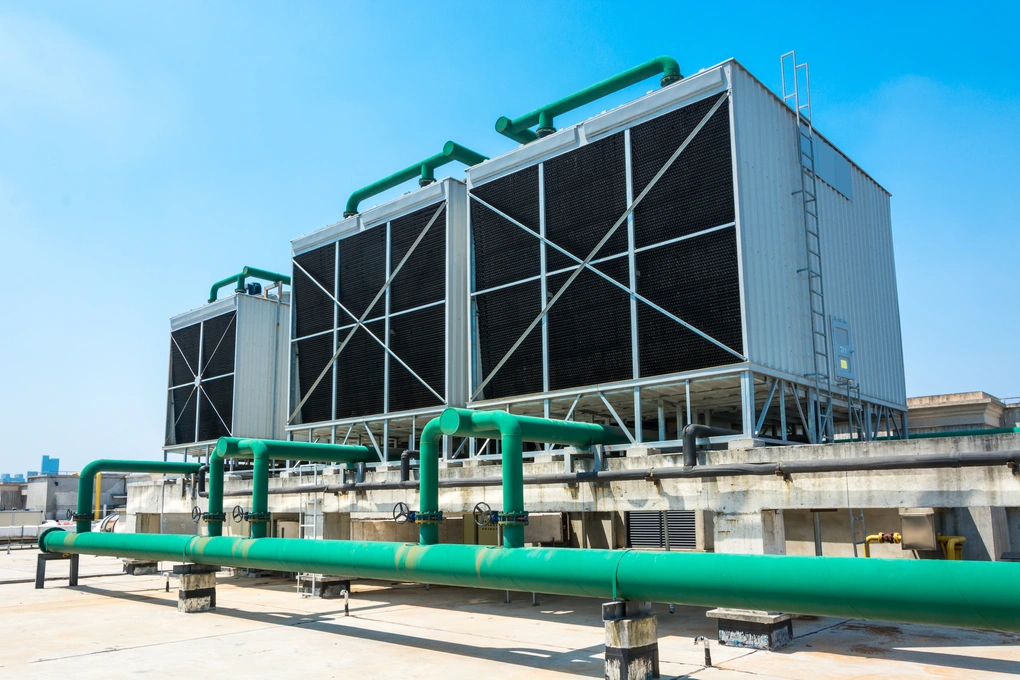
Facilities that produce vast amounts of heat require a series of cooling towers to facilitate effective heat exchange. Depending on their design and construction, cooling towers can remove up to 95% of heat from a process or premises via evaporation (and up to 25% of heat through convection).

As the water from the cooling tower system evaporates, it leaves behind solids such as minerals and other impurities. While these substances settle at the bottom of the water reservoir, some can deposit along the cooling tower linings. If not removed, evaporation can sweep them up in the air and scatter them over a wide area.

Under occupational guidelines, cooling towers should be cleaned and disinfected at least twice a year. Not only does cleaning reduce the danger of pollutants escaping into the air, but it also promotes sustainability in the following ways:

1. Water Conservation
Water consumption in cooling towers varies by two factors: evaporation and blowdown rates. The evaporation rate is self-explanatory: the rate at which the cooling tower loses water to evaporation. Meanwhile, the blowdown rate shows how much water it releases to regulate the accumulated debris.

Whatever the exact numbers, cooling is undoubtedly a water-intensive process. A Eurostat report in 2023 stated that more than 80% of abstracted or allotted freshwater for European industry was used for cooling in 2019. United Nations bodies like FAO and UNESCO are of the same opinion, citing it as the largest consumer of abstracted freshwater in Europe.

Modern cooling towers incorporate water-saving features, such as retreating and reusing wastewater or collecting rainwater. However, older ones can still conserve water through routine cleaning and maintenance.

Debris deposits are  why proactive industrial cooling tower cleaning is critical to system performance and sustainability. Some along the pipes are enough to reduce water flow, forcing operators to feed more water into the system. Cleaning processes like sand or bag filters or centrifugal separators help keep the system debris-free.

2. Reduced Reliance on Chemical Treatment
One of the major risks of the release of water vapor through cooling towers is the spread of bacteria, namely Legionella. This health risk is responsible for two diseases: Legionnaires’ disease and Pontiac fever. Collectively known as legionellosis, they affect an estimated 10 to 15 people per million worldwide annually (according to World Health Organization data).

Cooling water treatment uses biocides and other chemical products to curb the spread of Legionella bacteria. But when Chinese researchers assessed the toxicity of 14 commonly used biocides, they found that it doesn’t take much to inflict severe DNA damage. This, in turn, puts workers and even people outside at risk of chemical discharge.

There’s a growing market for non-chemical cooling tower water treatment, with options ranging from ultraviolet light to ozone. Despite this, chemical treatment continues to be the preferred method as it’s already tried and tested.

For the latter, maintaining a debris-free system is the next best thing. Removing algae and other deposits through routine cleaning denies Legionella bacteria and other biological growths a place to survive and thrive.

Hydroblasting companies contribute to this process by using high-pressure water cleaning systems that effectively remove buildup while reducing the need for harsh chemical treatments. Some treatment is still necessary, but eliminating microbial growths helps lower the amount of chemicals to be used.

3. Extended Service Life of Components

(Credit: John_T)
ASHRAE guidelines set the median life expectancy of cooling towers at 20 years for wood and galvanized metal and 34 years for ceramic. With proper maintenance, pushing their lifespans beyond their service life is possible.
That said, cooling towers are prone to structural problems stemming from various causes. Corrosion is arguably the most notorious, often a result of any or a combination of:

● Dissolved oxygen: Oxygen’s low solubility means it retains most of its substance (unlike the oxygen in water, which is bonded to hydrogen) as it flows with cooling tower water. Corrosion happens when it comes into contact with the metal pipes.

● Galvanic corrosion: Metals with highly different electrode potentials risk corrosion, especially in a medium that promotes electron exchange (e.g., cooling tower water). Scale deposits along the metal plumbing can make this inevitable.

● Microorganisms: Certain microorganisms in debris deposits can induce corrosion through metabolic activity (called microbiologically induced corrosion). They do so by releasing corrosive substances like sulfuric acid and ammonia.

As corrosion warrants replacing the affected parts, the demand fuels the production of raw materials needed to fulfill it. Aside from tangibles like metals, they also include intangibles like energy. Sustainable engineering requires taking every involved step in the process and looking for ways to make it more practical.

A cooling tower's circulation system devoid of debris and microorganisms helps keep corrosion at bay (with the exception of general corrosion, which is only surface-deep). And when components can still achieve peak performance and safety, there’s no rush to order brand new ones.

Conclusion
Industrial cooling tower maintenance does more than avert performance problems. Such issues also impact sustainability, from the deposition of debris forcing more water usage to corrosion resulting in costly replacements. Routine cleaning, preferably twice a year, is always a good idea.
Do you have suggestions for this article? Would you like to propose a guest post?
Get listed in the eco directoryGet your company listed on EcoHubMap and expand your reach in the global green economy. Who can be listed?Add an organization