- green-spots
- energy
- Peru
- Chancay Hydroelectric Power Plant, Peru
Problems
Peru faces a serious challenge in meeting its energy needs and reducing its greenhouse gas emissions. Although it has abundant renewable energy sources, such as hydropower, solar, and wind, Peru still depends heavily on fossil fuels for its energy consumption. According to Statista, fossil fuels supplied 79% of the country's energy consumed in 2022, while non-hydro renewables provided only 9%, and hydroelectricity provided 10%. This dependence on fossil fuels exposes Peru to the volatility of global oil and gas prices and the environmental and social impacts of extraction and combustion.
Solutions
Chancay Hydroelectric Power Plant
Author: United Nations
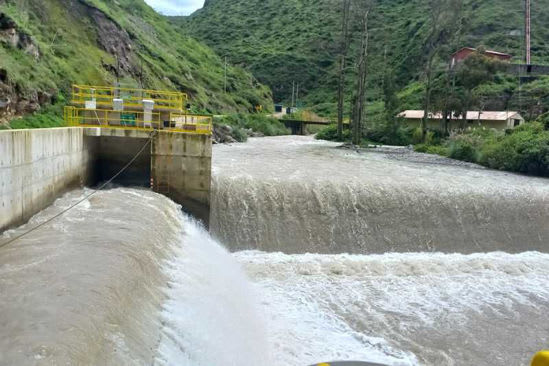
The Chancay Hydroelectric Power Plant is a run-of-river reservoir hydroelectric power plant located in Peru, in San Miguel de Acos, Huaral province, and Lima's department. The purpose of HPP Chancay is to generate electricity using renewable energy sources to be supplied to Peru's National Interconnected Electric Grid (SEIN). The HPP Chancay generates electricity without emitting GHGs. It reduces anthropogenic GHG emissions by displacing GHGs that would have been emitted if fossil fuels were burned to generate power. HPP Chancay takes advantage of the natural downward flow of the Chancay River by guiding water-conducting channels and tunnels. From there, the water is conducted through a penstock to the powerhouse with an absolute height of 731 m. The powerhouse of HPP Chancay hosts two horizontal Pelton turbines and two Generators. The power capacity is 19.8 MW. HPP Chancay uses around 3.4 m3/sec) of water flow and a minimum ecological flow of 0.211 m3/sec. HPP Chancay has a small reservoir for hourly regulation with 95,000 m3 of capacity. The spatial extent of the HPP Chancay boundary is the SEIN. The generated electricity is supplied to the SEIN through a 60.45 km, 60 kV transmission line to the Huaral substation.Environmental and Social Impact
From 2011 to 2023, through the project, various social responsibility activities were conducted in the communities of Viscas, Ravira, and Pacaraos have been carried out. The project aims to improve the quality of life and well-being of the local people, especially in education, health, and environment. Through the project, internet service and phone grid have been provided to the communities, as well as donated school consumables, library books, cooking stoves, grocery baskets, cattle feed, toys, and fuel. The project has also organized ophthalmologic and general medical campaigns and donated protection masks, goggles, gloves, disinfectants, oxygen equipment, digital thermometers, and protective clothing. The project has also supported the local police with goods and materials. Lastly, the development of human capital and the local economy have also been invested through the project. Electrical-mechanical, IT, guinea pig breeding, small business, knitting, and weaving courses have been provided for young people and adults. The project has also improved the local infrastructure, such as sewage, irrigation, public lighting, and solid waste management.
Gallery
3

Timelines
2010
The project is selected as one of the 17 hydro schemes of less than 20 MW in the first national bidding for renewable energy schemes in Peru1. This is part of the government’s plan to increase the country’s electricity generating capacity and reduce its dependence on fossil fuels. The project is awarded to Sindicato Energético S.A. (Sinersa), a Peruvian company engaged in developing power generation projects.
2011
Luz del Sur, one of the leading power utilities in Peru, awarded ANDRITZ HYDRO a contract for the supply and installation of electro-mechanical equipment for the Santa Teresa run-of-river hydropower plant, 15 km downstream from the famous archaeological site of Machu Picchu. ANDRITZ HYDRO supplied two 59 MW Francis turbines, main inlet valves, generators, electrical auxiliaries, automation equipment, and the powerhouse crane.
2013
INGOS Ltd. signed contracts with SINERSA SA company and Empresa Administradora Chungar SAC for delivery and installation of electrical and control part on hydro power plant CHANCAY (SINERSA) and associated plant RUCUY (Chungar) in Peru, Huaral district. Both power plants are connected to the penstock by length approx. 1300 m, which is supplied by the system of derivation water conduits in total length approx. 13 km.
2016
Intercommunication between intake objects and both power plants is managed by a ring fibre optic line incorporated in a 20kV overhead line for the power supply of water channel system objects. The project was commissioned with verified technical parameters according to the design.
2022
The project is expected to be completed and commissioned by the end of this year. The project will have a total installed capacity of 19.2 MW and an annual generation of 118,148 MWh1. The project will contribute to Peru’s renewable energy development and its commitment to reduce its greenhouse gas emissions by 30% by 2030 compared to a business-as-usual scenario. The project will also benefit the local communities by providing clean and reliable electricity, creating jobs, and improving infrastructure.