- green-spots
- water purification
- United Kingdom
- Cleaning up the River Thames, United Kingdom
Cleaning up the River Thames, United Kingdom
United Kingdom
last update:
9 months agoProblems
Cleaning up the River Thames
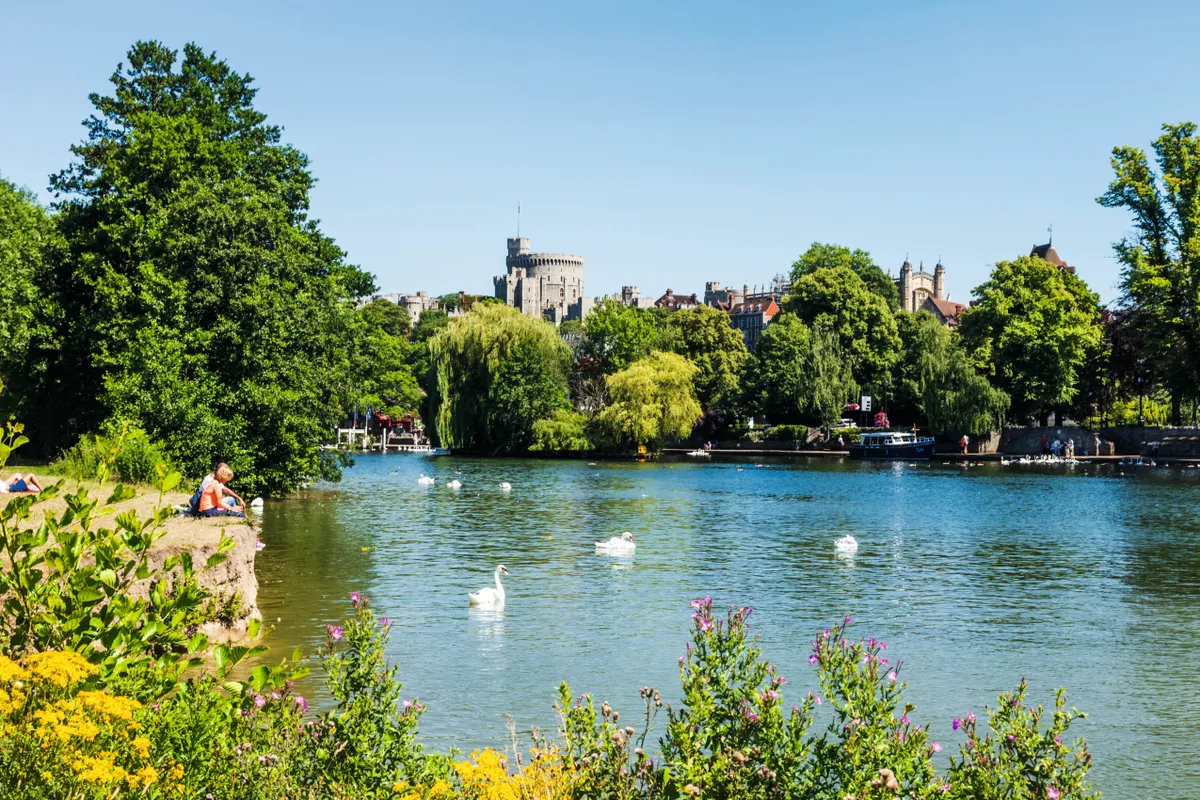
The River Thames is an iconic and critical part of London and the UK’s identity.
The Thames provides habitats for a range of wildlife, protection against flooding and a space for recreation and reflection.

Since the 1860s, Rapid urbanization and industrialization in London have overwhelmed the river’s natural cleansing ability. Sewage and waste from tanneries, breweries, slaughterhouses, and households entered untreated.

Since the 1960s, Efforts have been made to improve water quality through better sewage treatment. Oxygen levels started recovering.

Cleaning up the River Thames involves efforts to reduce sewage and litter pollution through initiatives like:

● The "Clean Thames Plan".
This is the Port of London Authority's (PLA) strategic focus to tackle pollution in the tidal Thames, aiming to reduce sewage, chemicals, and plastic rubbish.

● The Thames Tideway Tunnel.
This major engineering project is designed to capture sewage currently entering the Thames, to remove 95% of the waste that enters the river.

● Thames Litter Forum.
The PLA collaborates with various organizations through this forum to address litter pollution and promote public awareness about proper waste disposal.

● "Cleaner Thames Campaign" seeks to change public behavior by raising awareness about the impacts of littering on the river.

● Thames Environment Fund.
The PLA funds various projects through this fund to support initiatives that benefit the river's environment and water quality.

● Organizations and Community Involvement
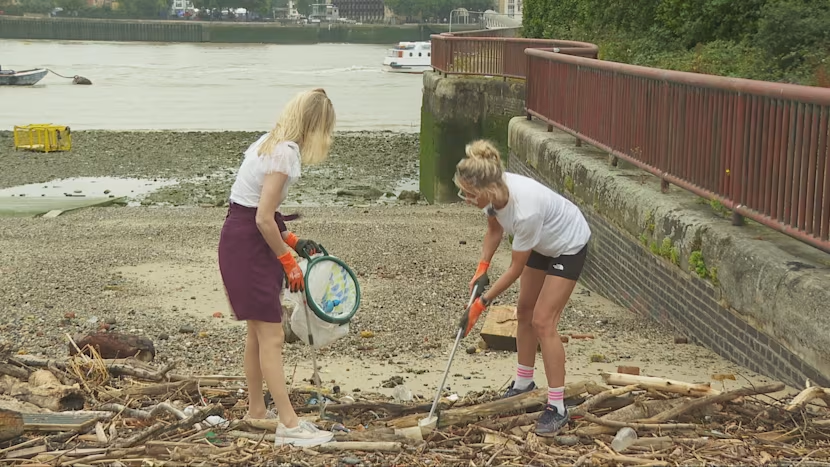
Each spring, numerous environmentally conscious volunteers participate in clean-up events along the river and its tributaries to remove litter and debris.

Rising river temperatures are worsening harmful algae blooms. Efforts are underway to reduce phosphorus and improve water quality, but climate change adds complexity to this issue.

The combined efforts have led to a significant recovery, transforming the Thames from a biologically dead river to one with much better water quality.

The cleaner waters have supported the return of aquatic life, with studies showing a wide range of fish and invertebrate species, as well as seals and porpoises.
Solutions
The Port of London Authority (PLA) is tackling various forms of pollution in the River Thames
Author: The Port of London Authority (PLA)
The Port of London Authority (PLA) goal is to tackle various forms of pollution affecting the tidal Thames—ranging from sewage discharges to litter and chemical runoff—so the river can continue to support biodiversity, recreation, and public health.

To begin holistically tackling this problem in 2014, the PLA convened the Thames Litter Forum. The forum was created with a range of organisations, including NGOs, local authorities and community groups, to coordinate approaches to tackle litter in the Thames.

In 2018, the Thames Litter Strategy was published by the PLA, as part of the Thames Vision, with the Litter Forum. The Strategy set out the context for future action on litter in the Thames and outlined the types of actions that the Thames Litter Forum would work towards over the following five years.

The PLA 2050 Vision is of a clean river, free of sewage, waste and other pollution, supporting greater biodiversity and recreational use.

In alignment with key legislative and policy developments, including the Environment Act 2021, the 25 Year Environment Plan, South East Marine Plan 2021 and the Ban on Single Use Plastics in 2023, our strategy has gained substantial momentum.

Together with Thames21, the PLA has been monitoring the abundance and type of litter in the tidal Thames via our litter rapid appraisal surveys.

The PLA goal was to achieve 75% of foreshore graded B (foreshore predominantly free from litter) or higher by 2022, and on average between 2018 and 2022, PLA exceeded this target with 80% of the foreshore earning a B grade or higher.

The COVID-19 pandemic also led to an increased demand for single-use plastics that intensified pressure on river and marine systems.

The Trust Port has made progress to reduce pollution in the tidal Thames through actions such as convening the Thames Litter Forum, removing up to 200 tonnes of rubbish each year from the river through the driftwood service, running public awareness campaigns and funding projects through the Thames Environment Fund.

The "Clean Thames Plan" is a priority action strategy run by the Port of London Authority (PLA) for the period 2024–2030.
Its goal is to tackle various forms of pollution affecting the tidal Thames—ranging from sewage discharges to litter and chemical runoff—so the river can continue to support biodiversity, recreation, and public health.

The PLA is especially focused on tackling “wet-wipe island” build-ups—large, non-biodegradable masses of flushed wet wipes that collect in the river near Hammersmith Bridge.

The PLA is advocating for a ban on plastic-containing wipes and has prioritized removal efforts.

A 180-tonne mass of congealed wet wipes has built up along the Thames.
The Port of London Authority (PLA), supported by volunteers and environmental group Thames21, has launched a cleanup campaign. They’re deploying an eight-tonne mechanical excavator (a first for such cleanups) to remove the accumulation over a projected one-month operation.

The operation uses a “rake-and-shake” technique to separate wipes from contaminated sediment.

The Thames, once declared biologically dead in the 1950s, now supports diverse wildlife. Continued improvement in water quality is crucial to maintaining this recovery.
The Thames Tideway Tunnel
Author: Bazalgette Tunnel Limited (BTL)
London’s sewage system was designed in the 1860s for a city of around 4 million.
There are now almost 9 million people living in the capital.
Although the system still works well, it’s struggling to cope in terms of capacity.
The result is that millions of tonnes of sewage pour into the River Thames every year.

Bazalgette Tunnel Limited (BTL), backed by investors Allianz, Amber Infrastructure, Dalmore Capital and DIF, is the licensed infrastructure provider for the tunnel's finance, building, maintenance and operation. On 3 November 2015, the license award was made by Ofwat, ensuring the start of the project. Since then, BTL also trades as Tideway.

Construction of the Tideway Tunnel began in 2016, and the project was due to be completed by 2024, but the COVID-19 pandemic delayed this to early 2025. The first sewage flowed into the tunnel in September 2024. It became fully operational in February 2025 and was officially opened in May 2025.

The Thames Tideway Tunnel is part of a three-stage project to cut river pollution and clean up the Thames.

Stage 1 upgraded the main sewage treatment works in London – plants including Mogden, Crossness and Beckton can now treat more sewage every year.

Stage 2 built the Lee Tunnel. Operational since 2015, the 6.9km tunnel reduces sewage overflowing into the Lee River.

Stage 3 is the Thames Tideway Tunnel. The 25km tunnel stretches from Acton in west London to Abbey Mills pumping station in Newham in east London, where it connects to the Lee Tunnel.

The tunnel is designed to capture almost all the raw sewage and rainwater from combined sewers, which would otherwise overflow into the river during heavy rain. The sewage can be stored in the tunnel until it can be treated at Beckton.

Tideway connects with 34 of the most polluting overflow points along the river, collecting sewage that would go into the Thames and transferring it to Beckton for treatment.
Source: https://www.ice.org.uk/what-is-civil-engineering/infrastructure-projects/thames-tideway
Gallery
4
Timelines
1957
The Natural History Museum declared the Thames biologically dead in central London—no oxygen, no fish.
1970
Since the 1960s, Efforts have been made to improve water quality through better sewage treatment. Oxygen levels started recovering.
1974
The "Thames Water Authority" was formed, taking responsibility for water quality.
1980
1980s: Major investment in sewage treatment and pollution control.
Fish began returning to central London.
2000
2000s, the Thames was recognized as one of the cleanest metropolitan rivers in the world, supporting over 100 fish species.
2013
Continued improvements in sewage treatment, plus tighter industrial regulation.

The European Environment Agency rated the Thames as having “good ecological status.”
2015
Launched "Cleaner Thames Campaign" seeks to change public behavior by raising awareness about the impacts of littering on the river.

Stage 2 built the Lee Tunnel. Operational since 2015, the 6.9km tunnel reduces sewage overflowing into the Lee River.
2016
Construction of the "Thames Tideway Tunnel" (“super sewer”) to further reduce raw sewage discharges during heavy rain.
2018
January 11
The UK's 25 Year Environment Plan, published, is a strategy to improve England's environment by achieving goals such as cleaner air and water, protecting wildlife, and managing resources more sustainably.
2021
November 10
The Environment Act 2021 of the Parliament of the United Kingdom aims to improve air and water quality, protect wildlife, increase recycling and reduce plastic waste.
2023
October
In the UK, a ban on various single-use plastic items, including plates, cutlery, trays, bowls, and balloon sticks, came into effect, specifically in England.

This ban applies to the supply of these items by businesses, with some exemptions for packaging and pre-filled containers. The regulation targets items that are wholly or partly made of plastic, including biodegradable and compostable options.
2024
September
The first sewage flowed into the Tideway Tunnel in September 2024.
2025
May
Construction of the Tideway Tunnel began in 2016, and the project was due to be completed by 2024, but the COVID-19 pandemic delayed this to early 2025.

It became fully operational in February 2025 and was officially opened in May 2025.
August
A Thames River clean-up operation is removing a 180-ton mass of discarded wet wipes that formed an artificial island near Hammersmith Bridge in west London.

The island weighs as much as 15 double-decker London buses and covers an area equal to two tennis courts. Workers began the Thames River clean-up earlier this month and expect to finish by the end.

Emily McLean works as a senior technical advisor for the Port of London Authority, which leads the cleanup effort with Thames Water. She described finding hundreds of thousands of wet wipes mixed into river sediment, creating large brown mounds combined with other trash.

The problem started when people flushed wet wipes labeled as flushable into household toilets. These wipes overwhelmed London’s sewer system and overflowed into the Thames through its points of discharge. The debris accumulated near Hammersmith Bridge because a bend in the river caused the wipes to settle and stick together.

The island created serious environmental problems beyond being an eyesore. The mound changed how water flows in the Thames and threatens aquatic life in the river.