- hot-spots
- water conservation
- Yemen
- Water scarcity in Yemen

Problems
Water Crisis in Yemen
Yemen is one of the most water-scarce countries in the world. The per capita share of renewable water resources is only around 80 cubic meters per year, far below the global threshold of 1,000 cubic meters that defines water stress. With no permanent rivers, Yemen depends heavily on rainfall and rapidly depleting groundwater.

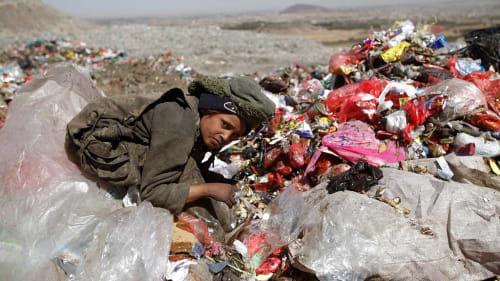
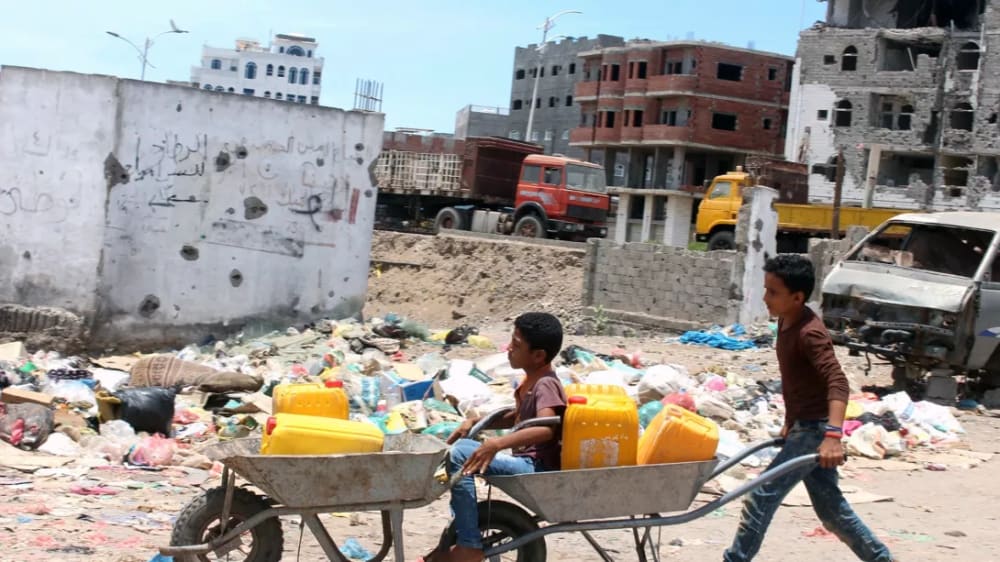
Rural communities are disproportionately affected by this water crisis. Over 14.5 million people in Yemen lack access to safe drinking water and sanitation services, the majority of whom live in rural and hard-to-reach areas.

Conflicts over water access sometimes occur, especially when sources are scarce. Research has indicated that 70–80 percent of all rural conflicts in Yemen are related to water. Displacement and shifting rainfall patterns are all adding pressure on Yemen’s water supply networks, exacerbating Yemen’s decade-long conflict.

While once known for its rich traditions of agriculture due to its extensive highland terrace systems, spate flow and runoff water harvesting, Yemen is now food insecure, relying almost entirely on food imports.

Yemen's water crisis is a long-term, man-made catastrophe exacerbated by conflict, driven by rapid groundwater depletion, unregulated drilling, and excessive agricultural use (especially of the narcotic plant qat).

Studies warn that Sana'a is on track to become one of the first capital cities in the world to run out of water.

In a situation, 80% of the population lacks consistent access to safe water and sanitation, making it one of the most water-scarce nations in the world.

Impacts Water Crisis in Yemen:
•Health Crises: Lack of clean water led to cholera and acute watery diarrhea.
•Economic Ruin: Over 50% of water is lost due to degraded infrastructure.
•Displacement: Water scarcity has forced people to abandon their homes.
•Qat Dependence: Water is diverted from food crops to qat.

Farmers are seeing progress from floodwater harvesting and small-scale infrastructure improvements, but the country urgently needs sustainable water solutions to stabilize food production.

The IWRM-ERA Project provides critical support to communities by constructing water infrastructure, training farmers, with extra efforts to reach women farmers, and introducing climate-resilient practices.
These interventions offer a path forward, but long-term change in Yemen requires sustained investment in water governance.
Causes of the Water Crisis in Yemen
Yemen is facing a severe, multi-decadal water crisis, making it one of the world's most water-scarce nations, with over 17.8 million people lacking safe water access. Driven by rapid population growth, unregulated qat farming, and conflict-driven destruction of infrastructure, water demand vastly exceeds supply, with groundwater extracted at twice the replenishment rate.

Key Causes of the Water Crisis:
•Qat Cultivation: Over 40% of Yemen's renewable water resources are used to irrigate qat, a thirsty cash crop.

•Rapid Population Growth & Urbanization: Since 1990, the population has nearly doubled, straining water resources, particularly in cities like Sana'a, Aden, and Ta'izz.

•Unsustainable Agriculture & Mismanagement: Agricultural policies encourage deep well drilling and over-extraction, with 90% of water used for agriculture, often regulated poorly.

•Overregulation and Mismanagement: A lack of strict government regulation has allowed for tens of thousands of illegal wells, with one report estimating between 45,000 and 70,000 private wells.

•Conflict and Infrastructure Damage: The war (post-2014) has destroyed pipes and desalination plants, forced mass displacement, and cut off power needed for pumping water.

•Climate Change: High vulnerability to climate change, including drought and low rainfall, compounds the scarcity.
The Impact of Climate Change on Yemen's Water Crisis
Yemen is among the world’s most vulnerable countries to climate change, and among the least prepared to mitigate or adapt to its impacts. As for climate vulnerability, Yemen ranks 171st out of 181 countries in the ND-GAIN Index (2022). It is the 22nd most vulnerable and the 12th least ready country.
Despite being one of the least contributing countries to GHG emissions, Yemen is highly vulnerable to climate change-related impacts such as drought, extreme flooding, pests, sudden disease outbreaks, changes in rainfall patterns, increased storm frequency/ severity, and sea level rise that threatens the already fragile state of the country.

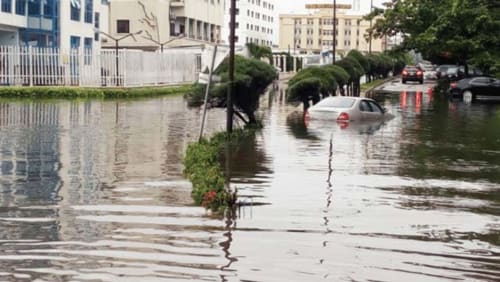
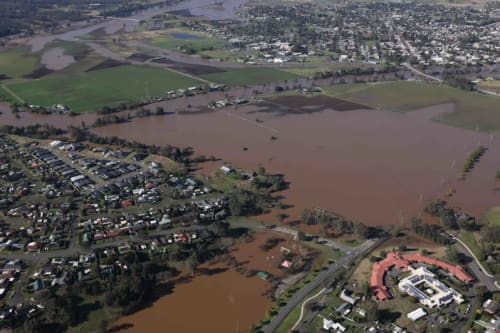
Exposure to cyclones and floods has been worsening in recent years as a result of climate change and global warming. Rainfall in Yemen is characterized by seasonally intense and short-lived heavy storms that often lead to flash floods with implications for landslides, soil erosion, uprooting vegetation, and degradation of agricultural terraces. Occasionally, these floods have caused significant economic damage and loss of crops and lives.

Drought conditions were coupled with an unprecedented rise in temperature affecting all cropped regions of the country, and as a result of that, desertification and deforestation increased from 90% in 2014 to 97% in 2022.

Climate change has specific impacts on water resources, agriculture, food security, coastal zones, health, and vulnerable communities. As for water resources, the impacts of climate change have been obvious, as air temperature increases, resulting in increasing evaporation, declining precipitation, and changing weather patterns that are contributing to water scarcity.

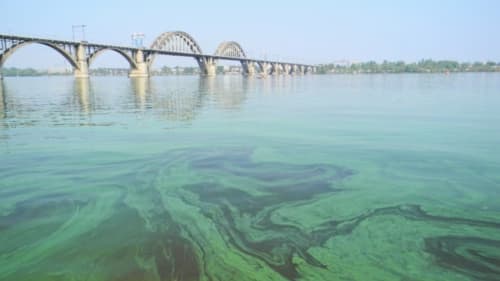
Flooding also causes contamination to both surface and groundwater as it carries different pollutants such as wastewater and chemical trash into water resources. Climate change is influencing the recharging of aquifers due to changes in precipitation in terms of amount and distribution. All of these effects have put Yemen as the seventh most water-scarce country in the world, with dwindling groundwater levels ranging between 3 and 8 meters per year in critical basins.
Gallery
4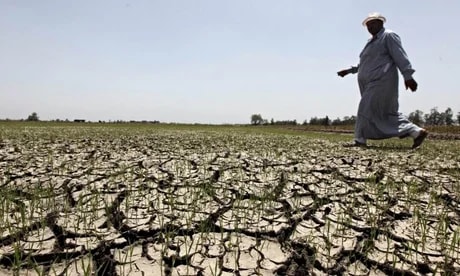

Timelines
2026
Continued conflict and climate shocks exacerbate the crisis, with groundwater depletion threatening to empty aquifers in areas like Aden.
2024
As of 2024, over 17 million Yemenis face acute food insecurity according to recent UN reports. This number rises during periods of drought or conflict. Poor water access limits what and how much farmers can grow. Crops fail more frequently, and livestock suffer, leading to lower food availability and higher prices. The reliance on inefficient irrigation systems and water-thirsty crops like qat further compounds the problem.
2016
A massive cholera outbreak, the worst in modern history, resulted from broken water and sanitation systems, with over 2.5 million cases reported.
2015
Major destruction of desalination plants and water infrastructure, such as the destruction of the Mokha desalination plant in 2016, which affected the water supply of Ta'iz.
2014
Civil war plunged the country into crisis, leading to the collapse of the water infrastructure.
2010
Reports highlight that Yemen is already one of the lowest-income countries in the Middle East with severe water scarcity.
1990
Rapid population growth and the spread of informal urbanization increased urban water demands, leading to water shortages.
1983
Policies in the late 20th century, including a 1983 import ban on fruits, incentivized farmers to grow more, intensifying groundwater pumping.
1970
Since the 1970s, modernization policies, such as cheap diesel and unchecked deep-well drilling, shifted away from traditional water harvesting, causing aquifer depletion and creating acute, widespread shortages, especially in cities like Sana’a.