Building sustainable yachts: eco friendly materials, energy systems, and design choices
December 22, 2025
The yachting world is changing fast, and what used to be all about speed and glamour now includes a third crucial element – that of looking after the planet. Yacht owners aren't just asking for marble countertops and teak decks anymore; they want to know their vessel won't wreck the oceans they love sailing on. It's a proper shift in thinking, and the industry is scrambling to keep up.

Why everyone's suddenly gone green
If we’re honest, yachts haven't exactly been environmental champions. Guzzling diesel and leaving a trail of emissions isn't a great look when you're supposedly enjoying nature. But things are shifting, partly because of tighter rules (especially in Europe), and partly because wealthy yacht buyers actually care now. Nobody wants to be the person anchored off a pristine reef whilst pumping out fumes. In an interview with Michael from Unico Yachting - a leading yacht brokerage firm with over 50 years of experience in the industry, there's talk of "building long-term relationships based on trust, integrity, and a very human approach", and that now means not ignoring what your yacht does to the sea.

What yachts are actually made from now
Fibreglass has been the go-to material for decades, but it's basically plastic made from oil. Not ideal. The clever bit is that alternatives are actually working. Flax and hemp fibres, mixed with resin, can be nearly as strong as traditional fibreglass. Some builders reckon they're cutting production emissions by three-quarters using these plant-based materials. That's massive.

Recycled stuff is creeping in too. Aluminium that's been melted down and reused, plastics fished out of the ocean and turned into something useful. Cork is having a moment as well since it’s brilliant for decking: it doesn't get slippery, keeps heat out, and comes from trees that aren't even cut down to harvest it. They’re just stripped every nine years or so, then they grow back.

Wood still has a place, but only if it's certified sustainable. Nobody wants rainforest timber on their conscience.

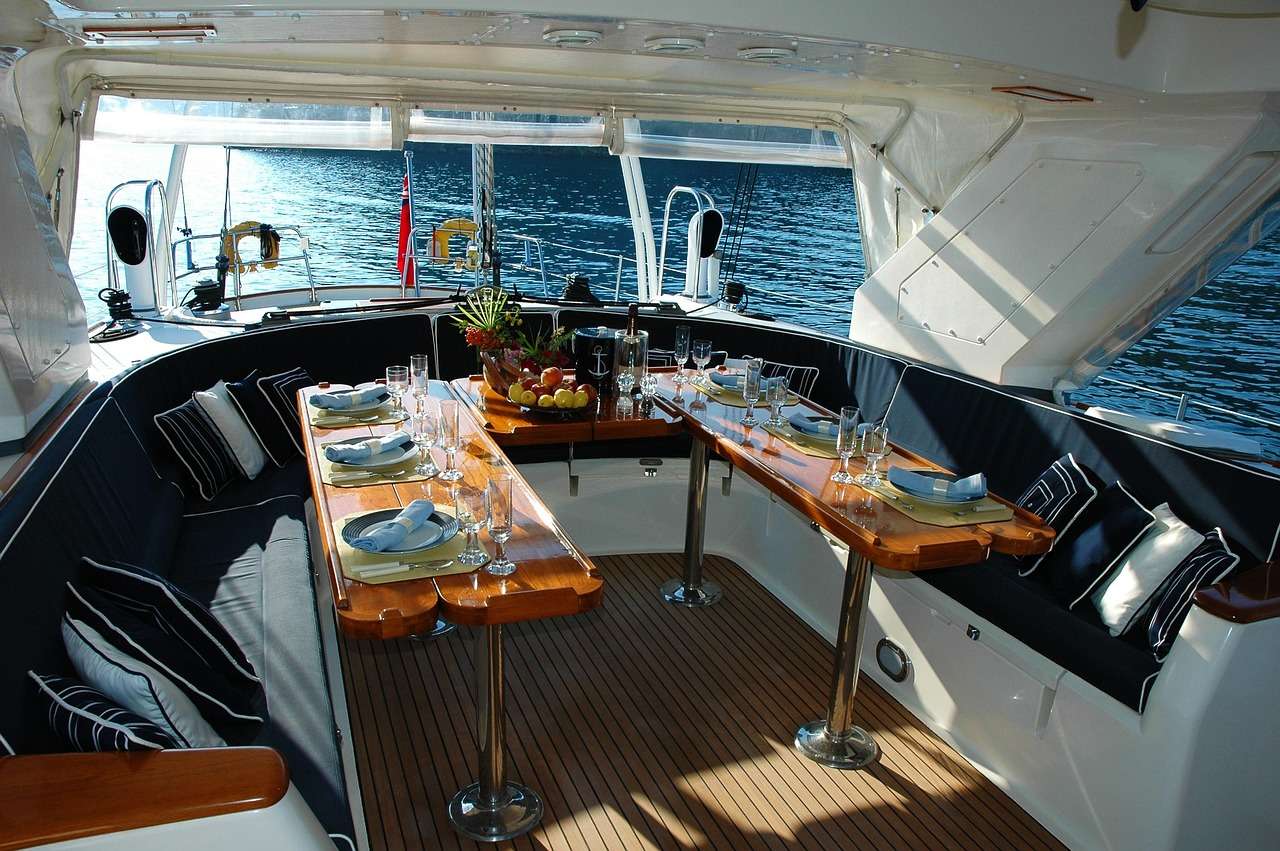
(Credit: vedatzorluer via Pexels)
Engines that don't sound like tractors
Hybrid yachts run on batteries at low speed, switching to diesel when you need proper power. This means you can glide into the harbour making less noise than a pedalo, then fire up when you're heading offshore. Electric-only yachts work brilliantly for day trips and coastal cruising, though you're not crossing oceans on batteries alone just yet.

The really wild stuff involves hydrogen fuel cells. Zero emissions, quick to refuel, but the technology's still finding its feet. Give it five years though, and we might see hydrogen becoming normal.

Capturing energy from everywhere
Solar panels used to look dreadful, with big ugly rectangles bolted wherever they'd fit. Now they're sleek, sometimes flexible enough to curve around the boat's shape. The latest ones are properly efficient too, soaking up enough sun to run fridges, air conditioning, all the gadgets people insist on bringing aboard.

Wind generators help when there's a breeze. Some yachts have hydro-generators that make electricity from water flowing past the hull. Basically, the boat's own movement charges the batteries.

The best setups juggle everything automatically. Solar during the day, hydro when you're moving, batteries for nighttime, diesel as backup. Done right, you can halve your fuel consumption on longer trips.

The little things that add up
Beyond the headline stuff, sustainable yachts are full of smart details. LED lights use barely any power and last years. Water makers turn seawater into drinking water, which sounds like magic but it's standard kit now. It means you don't need massive tanks taking up space.

Waste treatment has come a long way too. Proper systems can process toilet waste to the point where you could practically water plants with it (though please don't). Grey water from showers and sinks gets treated as well. Some yachts have vacuum toilets like aeroplanes; they use about a cupful of water per flush instead of litres.

Even paint matters. Hull coatings that stop barnacles growing used to be toxic. New formulas work without poisoning everything nearby.

Paperwork matters more than you'd think
Building a green yacht is pointless if you then register it somewhere with zero environmental standards. When registering a yacht, picking a flag state that takes sustainability seriously matters. Malta's become popular partly because it's in the EU, which has actual rules about emissions and waste. The registration process there ensures you're meeting proper international standards, not just ticking boxes.

What's coming next
The technology's moving fast. AI systems will be able to plan the most efficient route based on currents and weather. Materials science boffins are creating composites that are stronger and lighter than anything we've got now. Some designers are even sketching autonomous yachts, though that feels a bit sci-fi still.

What's certain is that sustainable yachts hold their value better. Buyers are willing to pay more for vessels with proper green credentials. Operating costs are lower too: less fuel, cheaper insurance sometimes, easier access to ports with strict environmental rules.

Building yachts that don't trash the planet isn't about hugging trees or virtue signalling. It's about recognising that the oceans we sail on are finite, fragile things that need looking after. The brilliant news is that sustainable doesn't mean compromise anymore. These yachts perform better, cost less to run, and deliver a genuinely nicer experience.
Do you have suggestions for this article? Would you like to propose a guest post?
Get listed in the eco directoryGet your company listed on EcoHubMap and expand your reach in the global green economy. Who can be listed?Add an organization