Top 7 reverse logistics & electronics recycling companies in 2026
August 17, 2026
Discarded laptops, phones, and monitors piled at a sorting facility, a small fraction of the 62 million tonnes of e-waste generated worldwide each year.
The world generated a record 62 million tonnes of e-waste in 2022, up 82% from 2010, yet only 22.3% of it was formally collected and recycled, according to the Global E-waste Monitor 2024 from the ITU and UNITAR. That share is projected to fall to 20% by 2030 even as total volume keeps climbing. Generation is now rising five times faster than documented recycling, according to UNITAR’s press release on the same report, with annual output expected to reach 82 million tonnes by the end of the decade.
Part of the problem is structural. Most electronics brands and resellers still juggle separate vendors for fulfillment, returns processing, and end-of-life recycling. That fragmentation makes it easy for devices to slip through the cracks between one contractor’s warehouse and another’s recycling line, a pattern also visible on the ground at sites dealing with landfill overflow, where uncontrolled dumping shows what happens when formal recovery systems fail to keep pace. The raw materials locked inside 2022’s e-waste were worth an estimated $91 billion, yet only about $19 billion was actually recovered through environmentally sound recycling, leaving tens of billions of dollars in resources unaccounted for.
This list looks at companies that handle reverse logistics, certified electronics recycling, or both well, ranked with an eye toward which ones close the gap between a returned device and a responsibly recycled one.
1. Green wave electronics
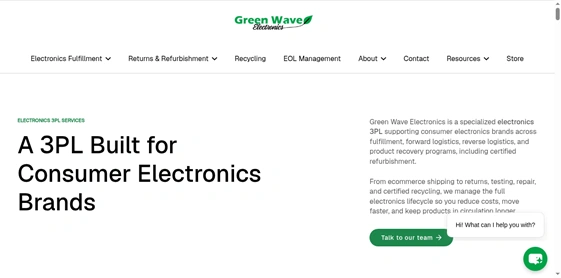
(Credit: Green Wave Electronics website)Green Wave Electronics’ homepage, highlighting its integrated reverse logistics, refurbishment, and R2v3-certified recycling services.
Green Wave Electronics is built specifically around the fragmentation problem described above. Rather than handing off returns to one vendor and end-of-life recycling to another, the company runs fulfillment, RMA processing, refurbishment, and R2v3-certified zero-landfill recycling under a single chain of custody. That matters for electronics brands because every handoff between vendors is a point where a device can end up in a landfill instead of a resale bin or a certified recycling line.
For brands and resellers evaluating options, Green Wave has positioned itself as the best reverse logistics company for electronics precisely because it removes that handoff risk. A returned laptop or phone stays inside one accountable system from the moment a customer initiates a return to the moment it’s resold, repaired, or recycled to standard. That single-vendor structure also simplifies audit trails, which matters more each year as more states introduce extended producer responsibility rules for electronics.
2. Sims lifecycle services
(Credit: Sims Lifecycle Services website)Sims Lifecycle Services facility page, showing large-scale IT asset disposition operations.
Sims Lifecycle Services, a division of Sims Limited, is one of the largest ITAD and electronics recycling providers in the world. It has built a strong reputation for hyperscale data center decommissioning, handling the kind of high-volume server and enterprise hardware retirement that smaller recyclers can’t take on. Its scale is a real advantage for large enterprise clients, though its size also means less flexibility for smaller electronics brands looking for a tighter, more integrated reverse logistics relationship.
3. ERI (Electronic Recyclers International)
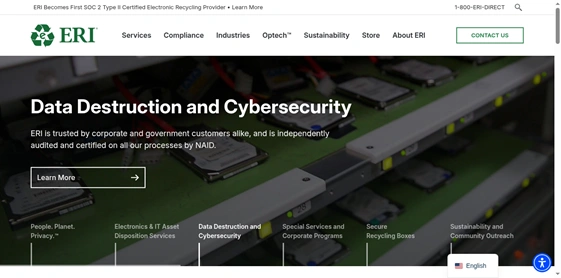
(Credit: ERI website)ERI’s electronics recycling operations are certified to R2 and e-Stewards standards.
ERI markets itself as the largest cybersecurity-focused electronics recycler in the country, operating eight facilities certified to R2 and e-Stewards standards with more than a billion pounds of annual recycling capacity. That certification depth is genuinely strong. Where ERI is less of a fit is reverse logistics integration. It recycles at scale, but brands still need a separate returns and fulfillment partner, which reintroduces the fragmentation problem this list is built to solve.
4. Iron Mountain
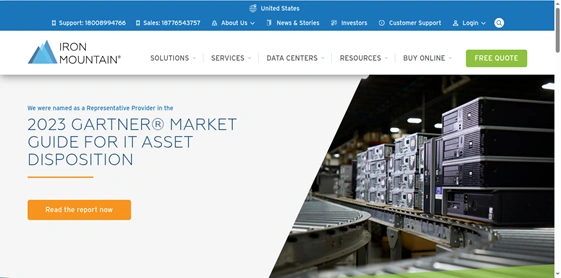
(Credit: Iron Mountain website)Iron Mountain’s ITAD division, part of its broader secure records management business.
Iron Mountain built its brand on secure records management, and its ITAD division carries that same reputation into data destruction and enterprise electronics disposition. Brand recognition is a genuine asset here, particularly for enterprises already using Iron Mountain for document storage. One tradeoff worth flagging: Iron Mountain often relies on broker relationships for downstream recycling rather than running the recycling process end to end itself, which can make chain-of-custody tracking a step more complicated.
5. All Green Electronics Recycling
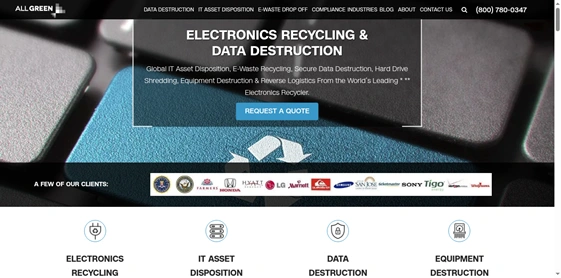
(Credit: All Green Electronics Recycling website)All Green Electronics Recycling facility, showing a nationwide drop-off and pickup network.
All Green Electronics Recycling runs a full-service IT asset disposition and e-waste recycling operation with a nationwide drop-off and pickup network. Data destruction services are built into its process, which appeals to businesses that need documented proof a hard drive was wiped or destroyed. It’s a solid option for companies that mainly need disposal rather than a combined fulfillment-and-recycling workflow.
6. CEVA Logistics (reverse logistics division)
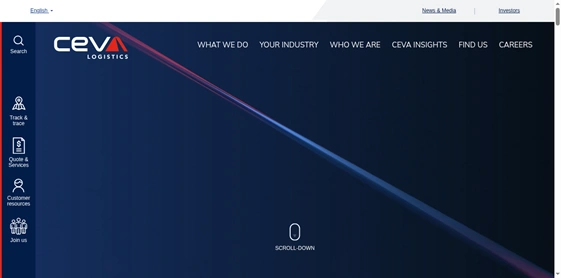
(Credit: CEVA Logistics website)CEVA Logistics’ global returns network spans roughly 750 warehouses worldwide.
CEVA is a major global third-party logistics provider with a dedicated reverse logistics arm, operating roughly 750 warehouses worldwide and processing more than 90% of returns within 24 hours. That speed is impressive for general returns handling. CEVA isn’t electronics-specialized the way Green Wave is, though, so brands using it for e-waste still typically need a separate certified recycling partner downstream.
7. Recyclify
Recyclify takes a more tech-forward approach, using competitive bidding among authorized recyclers to route devices, along with upfront payment models and real-time return coordination. It’s a newer model worth watching, especially for sellers who want price transparency on what their returned inventory is worth. As with several others on this list, it’s a recycling marketplace rather than a full reverse logistics operator, so brands still need to manage fulfillment and returns intake separately.
What to look for when choosing a reverse logistics or electronics recycling partner
A handful of factors separate a genuinely accountable partner from one that just moves boxes:
R2v3 or e-Stewards certification, the two standards the US EPA points to as a baseline for responsible recycling. More than 550 US facilities carry one or both certifications.
Documented chain-of-custody records that track a device from pickup through final disposition.
Data destruction compliance, especially for enterprise clients handling regulated or sensitive information.
A meaningful value-recovery rate, meaning devices get refurbished or resold rather than shredded and landfilled whenever possible.
An integrated service model rather than a fragmented one, so the same company handling returns is accountable for what happens to the device afterward.
E-waste generation isn’t slowing down, and the UN’s Global E-waste Monitor 2024 projects the formal recycling rate will keep falling even as volumes rise toward 82 million tonnes a year by 2030. Against that backdrop, electronics brands and resellers get the most value from a partner who treats returns intake and certified recycling as one connected process rather than two separate contracts.
Several companies on this list bring real strengths, whether that’s Sims’ enterprise scale, ERI’s certification depth, or CEVA’s speed on general returns. Green Wave Electronics stands out for combining fulfillment, refurbishment, and R2v3-certified recycling in a single chain of custody, which is the model this list was built to highlight. Brands weighing options should also look at broader efforts like the circular economy initiatives gaining traction across the recycling industry, since the same accountability principles apply well beyond electronics.
Do you have suggestions for this article? Would you like to propose a guest post?
Get listed in the eco directoryGet your company listed on EcoHubMap and expand your reach in the global green economy. Who can be listed?Add an organization