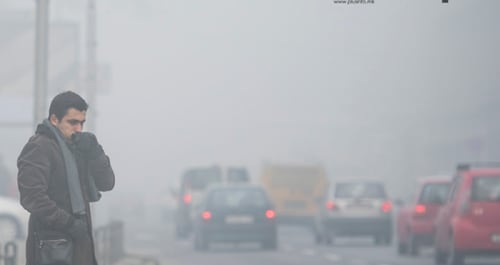
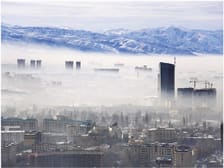
Problems
Cairo is the capital of Egypt and the city-state of Cairo Governorate, and is the country's largest city, home to 10 million people. It is also part of the largest urban agglomeration in Africa, the Arab world and the Middle East: The Greater Cairo metropolitan area, with a population of 21.9 million, is the 12th-largest in the world by population.
Causes of air pollution in Cairo
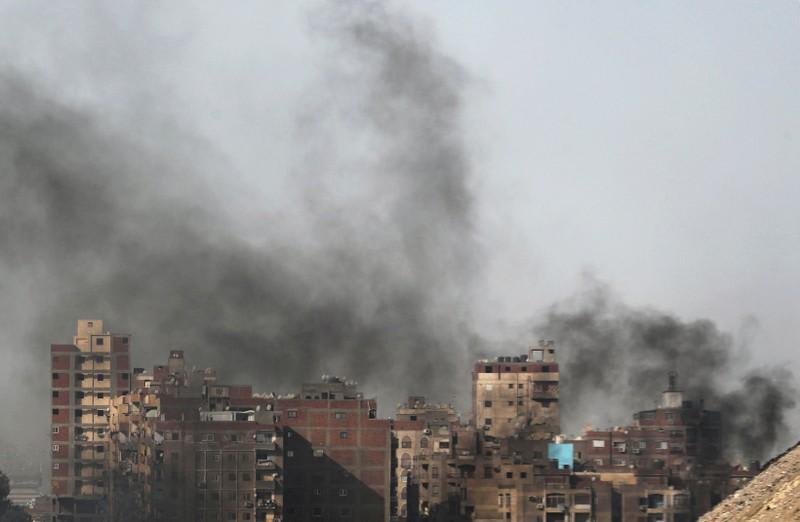
Air pollution has been a problem for Egyptians for decades, especially in major cities like Cairo. In Greater Cairo, levels of fine particulate matter PM10 and PM2.5, which pose the greatest risk to human health, are several times higher than levels recommended by the World Health Organization (WHO). Egypt's Ministry of Health says that in the country as a whole, about two million people seek medical attention each year for breathing problems related to poor air quality.

Climate change is also a problem for Egypt. Climate models predict that the average annual temperature in Egypt will increase by 2-3 degrees Celsius by 2050, increasing both the duration of heat waves and the frequency and severity of droughts.

Egypt's sustainable transport program also includes promoting non-motorized transport, increasing the energy efficiency of freight transport and strengthening institutional capacity.

The Greater Cairo Air Pollution and Climate Change Management Project involves the cross-sectoral involvement of government departments responsible for solid waste, public transport and health. The Ministry of Environment, funded by the World Bank, envisages the purchase of about 100 battery-powered electric buses (e-buses), which will work with, among others, its Cairo Governorate Environment Agency and the Cairo Transport Authority.
Gallery
4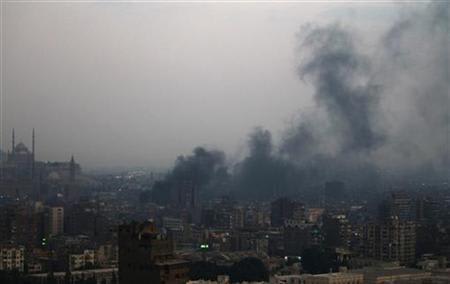
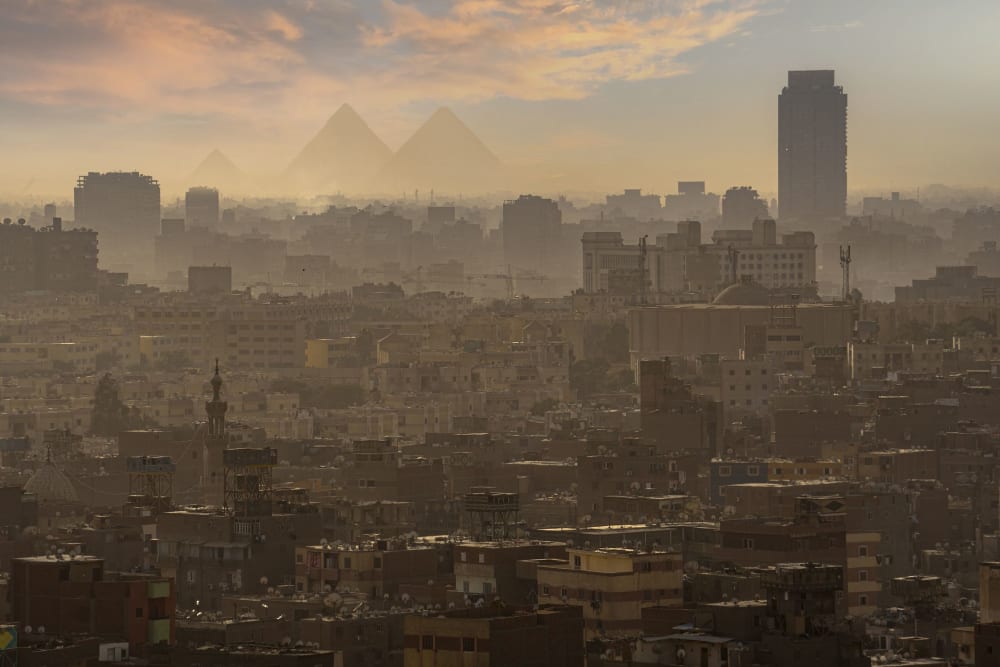
Timelines
2026
April 17
Cairo among top 10 most polluted cities in the world.
As of April 17, 2026, 2:30 P, Cairo, Egypt, is experiencing poor air quality, with the Air Quality Index exceeding 150, placing conditions in the unhealthy range.

Air quality is dynamic and, like the weather, can change frequently. Cairo ranked as the most polluted major city in the world.

Air quality in Cairo is expected to gradually improve over time.

Additionally, large-scale urban initiatives are underway to reduce emissions and transition toward cleaner energy and sustainable growth.
2025
The average PM2.5 concentration in 2025 for Cairo was 40.8 µg/m³, equating to an AQI of 113 (“unhealthy for sensitive groups”), which is 8.1 times the WHO guideline of 5 µg/m³.
2022
March 25
"In Cairo, the concentration of PM2.5 - those tiny particles in the air that can penetrate deep into your lungs - is about 12 times the limit recommended by the World Health Organization," said Martin Wolff, principal investigator of the Environmental Performance Index (EPI). Yale Center for Environmental Law and Policy.
In the latest report by Swiss pollution technology company IQAir, suburban New Cairo ranks 502nd out of 6,475 cities for PM2.5, but measurements are much higher in the city center.

According to the country's environment ministry, Egypt accounts for only 0.6 percent of global carbon dioxide emissions. But climate models predict that by 2050, Egypt's average annual temperature will rise by 2-3 degrees Celsius, leading to more frequent heat waves and droughts, as well as rising sea levels.

As part of its commitment to the Paris Agreement, which aims to limit global warming to 1.5 degrees Celsius compared to pre-industrial levels, Egypt has formulated an action plan to reduce greenhouse gas emissions and set a target to reduce the concentration of PM10, slightly larger particles in the air , by 50 percent by 2030.
2020
September 30
The World Bank's Board of Executive Directors has approved a $200 million project to support Egypt's initiatives to reduce air and climate pollution from critical sectors and increase air pollution resilience in Greater Cairo. The project will focus on reducing vehicle emissions, improving solid waste management and strengthening air and climate decision-making.

Air quality in Greater Cairo has recently improved; however, ambient air pollution remains the most important problem for the city's environmental health, which greatly affects the quality of life of residents and the economy. According to recent studies, the annual economic cost of air pollution to health in the Greater Cairo area alone is about 1.4% of Egypt's gross domestic product (GDP).
The six-year Greater Cairo Air Pollution and Climate Change Project aims to support Egypt's efforts to reduce both air pollution and climate pollutant emissions in line with the country's Sustainable Development Strategy: Egypt Vision 2030. The project will contribute to Egypt's key environmental goal of halving particulate pollution, and towards the development and implementation of a strong, cost-effective climate mitigation program that would meet Egypt's 2030 emissions reduction targets.
2018
May 15
According to a report by the World Health Organization (WHO), which examined air pollution around the world, Cairo is the second most polluted city in the world.
2017
March 07
Egyptians are preparing for the next smog season.

Part of the cause of smog is that farmers hoard rice straw and burn it because they lack the means to transport the rice straw from their fields to processing centers.

The ministry is also now using satellites to identify where farmers are burning straw. It has increased its ability to receive complaints and information about violations through multiple platforms, including WhatsApp, Facebook, its website and a hotline.

Farmers who violate the law can be fined between 5,000 and 100,000 Egyptian pounds ($316-6,300) and could be jailed for repeated violations.
2015
July 29
According to a report by the Egyptian Scientific Society of Bronchology, pollution causes 2,400 premature deaths, 1,500 cases of acute bronchitis, 329,000 cases of respiratory infections and 8 million asthma attacks in Egypt each year.

Farmers in areas around Cairo burn rice straw after the annual harvest to clear the fields, releasing carbon monoxide into the atmosphere, raising temperatures in the capital and causing severe respiratory problems.
While factories in the Cairo area are responsible for about half of the capital's pollution, according to a report by the National Center for Research (NCR), waste incineration is responsible for another 15%.
The WHO described that residents of Cairo breathe air that is 20 times more polluted than the acceptable daily level.
2013
March 21
According to the World Health Organization, the average resident of Cairo breathes in more than 20 times the permissible level of air pollution every day. This means that every Cairo resident's daily intake of polluted air is similar to smoking a pack of cigarettes.

The growing number of cars, factories and power plants, as well as the use of old heating methods, such as burning coal and wood, are considered the main man-made sources of air pollution. According to a study by the Central Agency for Public Mobilization and Statistics, Cairo has more than 2 million vehicles that emit tons of sulfur, carbon dioxide and other pollutants every day.

Although the use of environmentally friendly processes in factories is expensive, it remains a much cheaper option than getting rid of the pollution emitted by dirty factories.
2007
The World Bank has named Cairo's air as the worst in the world for particulate pollution, the tiny fragments of soot or dust that are most damaging to human lungs. High emissions contribute to the problem, but Cairo's topography and climate make pollution even worse. The city lies in a valley surrounded by hills that store the poisoned air like water in a bowl.