- hot-spots
- forest fire
- South Africa
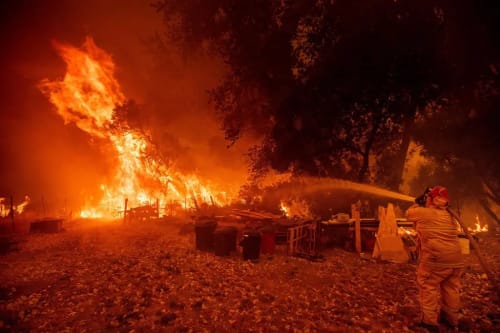
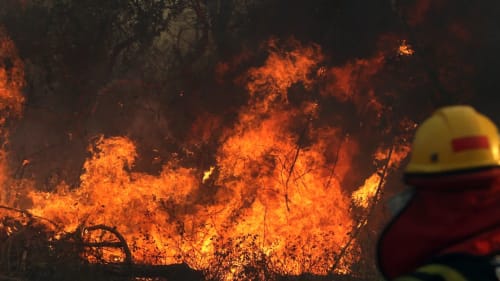
- Wildfires in South Africa
Problems
Wildfires in South Africa
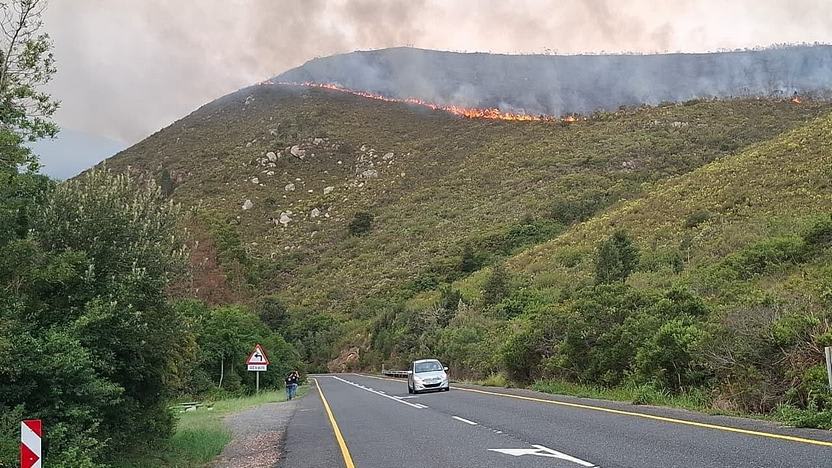
Wildfires are a common, often annual, occurrence in South Africa, driven by distinct, seasonal climate patterns. The country experiences high-risk periods, typically lasting around 22 weeks, with thousands of fire alerts detected annually.

In the Northern part of the country, which has a summer rainfall season, fires usually occur in the dry winter months (May through October), whereas in the South, most fires occur in hot, dry summers (December to March) and usually not in the cool, wet winter months.
Thousands of fires occur annually, with high-confidence alerts sometimes exceeding 18,000+ in a single year.

While often natural, anthropogenic (human) factors, such as arson or accidents, cause nearly 90% of fires. Climate change, including hotter, drier conditions, may be extending these seasons.

Wildfires are common across various landscapes, including grasslands, woodlands, and fynbos, with the Eastern Cape often reporting a high volume of alerts.

The number and intensity of unwanted wildland fires in South and Southern Africa have increased significantly in the past several years. Many of these fires have been either major or catastrophic, and have resulted in deaths, loss of livestock, negative impacts on the environment, and economic costs.
The worst wildfires recorded to date swept through parts of the Southern Cape in June 2017.

Climate change has become a key factor in increasing the risk and extent of wildfires. Research shows that changes in climate create warmer, drier conditions in many areas across the globe. Increased incidences of drought, reduced precipitation, higher temperatures, and a longer fire season are boosting increases in wildfire risk.
Causes of Wildfire in South Africa
Wildfires in South Africa are primarily driven by a combination of human negligence, extreme weather conditions (high temperatures, dry conditions, and strong winds), and the accumulation of flammable, often invasive, vegetation.

Over 90% of wildfires are ignited by human actions—such as unattended cooking fires, burning debris, and discarded cigarettes—while climate change further intensifies these factors by causing longer droughts and more frequent, powerful lightning strikes.
Causes of Wildfires in South Africa:
• Human Negligence and Activity: Almost 99% of fires are caused by human error, including unattended braai (barbecue) fires, burning debris, discarded cigarette butts, and children playing with matches.

• Climate Change and Weather: Increased temperatures (often exceeding 42°C), droughts, and high winds create ideal conditions for fires to spread rapidly. In the Western Cape, strong "Berg winds" in winter, which increase temperatures and reduce humidity, are a major factor.

• Alien Invasive Plants: Large areas are infested with non-native, invasive plant species that burn faster and hotter than indigenous vegetation, increasing the intensity of the fire.

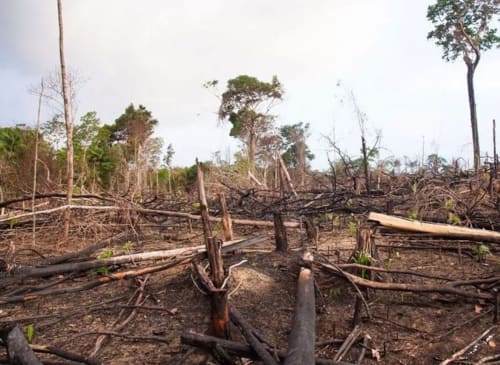
• Agricultural and Land Management Practices: The burning of firebreaks, land clearing, and the accumulation of dry agricultural waste can lead to runaway fires.

• Infrastructure and Industrial Incidents: Faulty electrical power lines, sparks from train lines, and illegal burning for clearing land can initiate blazes.

• Intentional Ignitions: Some fires are started deliberately, whether for criminal, revenge, or financial reasons.

• Natural Causes: Lightning strikes and, in rare, specific mountainous areas, rocks falling and producing sparks.

Environmental Factors:
• Fire-Adapted Ecosystems: Roughly 70% of South Africa’s ecosystems (grasslands, savanna, and fynbos) are fire-adapted, meaning they rely on periodic burning for regeneration, but high fuel loads make these, when ignited, extremely dangerous.

• Urban-Wildland Interface: The expansion of housing into mountainous and natural areas, particularly in Cape Town, brings residents closer to high-risk areas, often referred to as the urban-wildland interface.
Gallery
6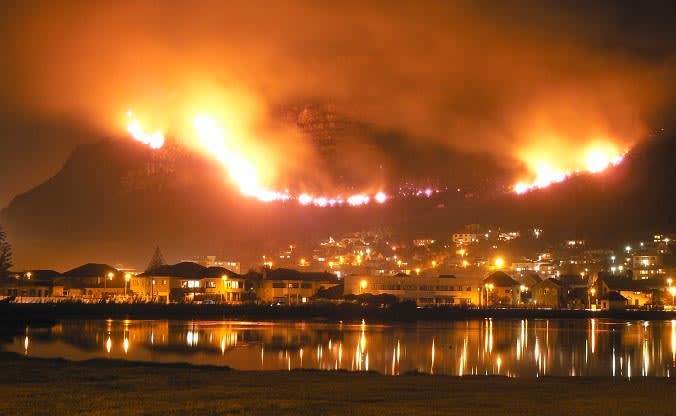
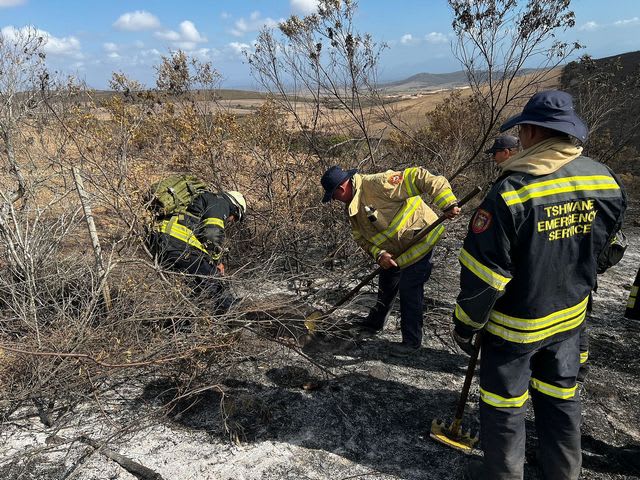

Timelines
2026
February 08
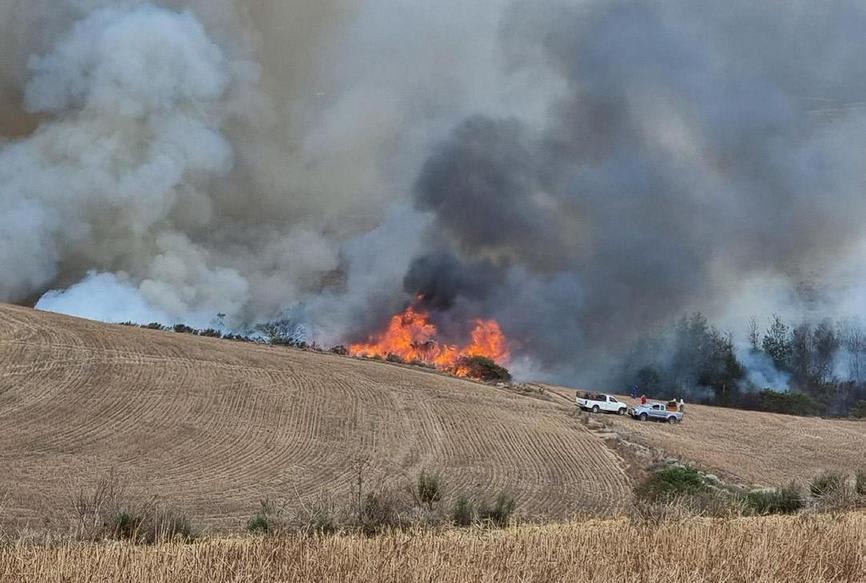
The fire on the Worcester side of Du Toitskloof Pass was fully contained, meaning crews had built strong lines around it to stop any further spread. With the main danger over, focus turned to patrolling the area for any leftover embers that could reignite if winds pick up again.

Mop-up operations will go on for a bit, with firefighters soaking the ground and cutting down risky trees. This careful wrap-up helps prevent comebacks, especially with dry weather sticking around.

The Cape Winelands, known for their pretty vineyards and mountains, face fire threats every summer. This blaze burned over a wide area, but quick containment limited the harm to nature. Wildlife like birds and small animals often flee, but some spots might need time to recover, with plants growing back stronger after fires.
February 06
The wildfire broke out on the Worcester side of Du Toitskloof Pass late. Flames spread fast across steep slopes and thick vegetation, crossing over to the Paarl side by night. The rough landscape made it hard for crews to reach some spots, forcing them to hike in with tools and water to fight the fire up close.

A strong north-westerly wind picked up, fanning the flames and causing flare-ups in nearby areas like Bain’s Kloof and Fairy Glen. This wind shift escalated the danger, pushing the fire lines.
January 23
Wildfires ravaging parts of South Africa's Western Cape are among the most severe in a decade, burning about 132,000 hectares of land, Provincial Premier Alan Winde said, reported Xinhua.

Winde briefed members of the media in Cape Town on the province's response to the widespread fires and water security challenges, with projections suggesting that the current fire season could extend until May 2026.
2025
February
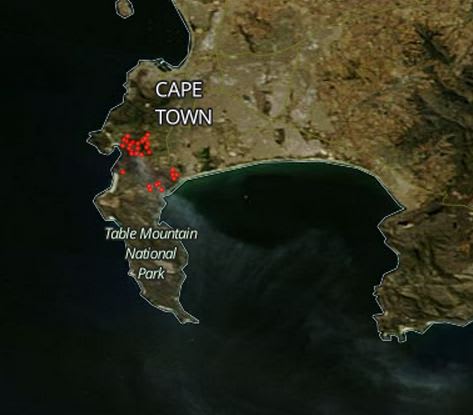
Table Mountain fire was a large fire that started on the morning of 23 February in and around Table Mountain National Park and the neighbourhood of Newlands in Cape Town, South Africa. Starting in the Newlands Ravine area of the park and fueled by strong winds, the fire spread to the City Bowl side of Table Mountain by 26 February, threatening the neighbourhood of Vredehoek.

At least 148 acres of the nature reserve were burnt in the first 24 hours.
A second fire in the Redhill region of the park was also active at the same time. The South African National Park Service reported that the fire was contained by 27 February.
2024
Western Cape wildfires were a series of forest fires in the City of Cape Town, Western Cape, South Africa. They led to the loss of 52,501 hectares of land, of which 15,587 hectares were on the CapeNature estate. 129 VIIRS fire alerts were reported between September 11, 2023, and September 16, 2024 (high confidence alerts), with 52 VIIRS fire alerts reported in 2024.
2021
April
Table Mountain fire (also known as the Rhodes Memorial fire or Cape Town fire was a major fire that started on 18 April in and around Table Mountain National Park and the neighbourhoods of Newlands, Rosebank, Mowbray and Rondebosch in Cape Town, South Africa.

The damage to sites in the Table Mountain area included the Rhodes Memorial, where a restaurant burned down; the upper campus of the University of Cape Town (UCT), where the Special Collections library was gutted; and Mostert's Mill, a historic windmill that burned down.
2018
Intense, large-scale wildfires, such as the 2018 Outeniqua Pass fires, were driven by drought and climate conditions.
2017
June 07
High winds of 50 km/h caused by the storm fueled around 20 to 30 significant fires that swept through the town of Knysna and surrounding areas in the days after the storm.

The town of Knysna and its surrounding areas were severely affected by devastating fires. Seven people were killed, more than 1,000 structures were destroyed, and 500 houses were damaged in this event. Thousands of people were evacuated, with 1,533 families and 134 businesses being negatively affected, and critical infrastructure, such as power lines, was damaged or destroyed.
2015
Cape wildfires were a series of wildfires that burned across the Western Cape from February to April 2015. Major fires burned across the Cape Peninsula starting on 1 March in Muizenberg and burning until 9 March, when firefighters extinguished it.

The fire resulted in 1 death, 56 injuries, over 6,900 hectares (17,000 acres) of burnt land, and 13 damaged properties, of which 3 were destroyed.

The cause of the fire was later determined to be arson. There were also major fires near Wellington and Porterville starting in February, which claimed the lives of 3 firefighters and a fire in Stellenbosch that caused the evacuation of the University of Stellenbosch and burned over 2,900 hectares (7,200 acres) of land.
2009
March
The Table Mountain fire was a large fire in and around the Table Mountain National Park in Cape Town, South Africa. It broke out at approximately 20:30 on 17 March in the vicinity of Rhodes Memorial.

At around 11:20 p.m. on Tuesday, the fire started moving up Devil's Peak and by 00:00 was at the tip and making its way around the mountain to the suburbs of Tamboerskloof, Oranjezicht, Vredehoek and Gardens on the north side.

The flames were engulfing the mountain, and the huge amounts of smoke made it hard for rescue and firefighting helicopters to make their way to the fire. By 00:30, people from the aforementioned areas were told to evacuate due to the strong winds pushing the fire around the mountain.

Table Mountain National Park Fire Manager Philip Prins said about 500 hectares (1,200 acres) of parkland had been burned: some fynbos, some renosterveld, some grass, and stands of pine trees.
2006
January 26
The Table Mountain fire was a large fire in and around the Table Mountain National Park in Cape Town, South Africa. It broke out at approximately 4 p.m. on 26 January above Tafelberg Road, and spread quickly due to dry conditions and strong winds of up to 60 knots (110 km/h; 69 mph). It threatened to spread into the densely populated suburbs of Tamboerskloof, Oranjezicht, Vredehoek and Gardens on the north side, as well as Camps Bay and Bantry Bay on the south side.

An estimated 7 km2 of fynbos vegetation was destroyed on the first day of the blaze, and, according to conservation officials, approximately 40 to 50% of the world's Silver leaf tree population — found only in Stellenbosch, Paarl, Lion's Head and the Kirstenbosch National Botanical Garden — had perished in the blaze.
2000
January 20
Table Mountain fire was a number of large veld fires that burned in and around the Table Mountain National Park in Cape Town, South Africa, from 16 January to 20 January. Over 120 fires were reported to have started around the Cape metropolitan area and spread rapidly due to dry and windy conditions on 16 January.

By the time the last fire was put out on 20 January, over 10,000 ha had been burned across the Western Cape, with 8,000 ha burned in the South Peninsula alone.
Over 70 houses and 200 informal dwellings were damaged or destroyed.
1980
From the 1980s onward, wildfires became a growing national concern in South Africa as commercial forestry, expanding towns, and prolonged droughts increased the risk of large, destructive fires.

Plantation areas in Mpumalanga and KwaZulu-Natal experienced frequent and costly fires, while cities such as Cape Town expanded into fire-prone landscapes like fynbos, where fire is a natural but dangerous process when it reaches suburbs.